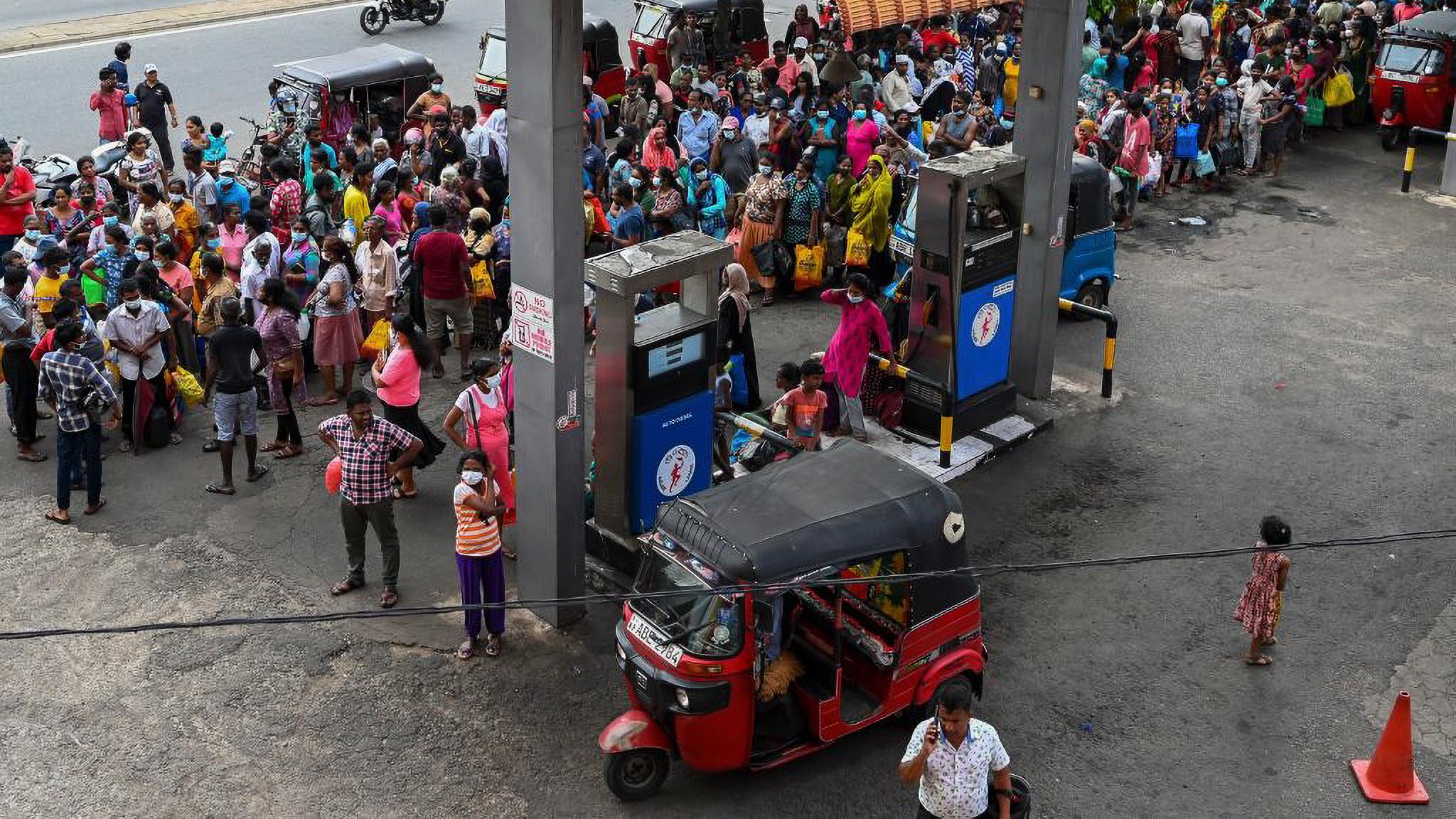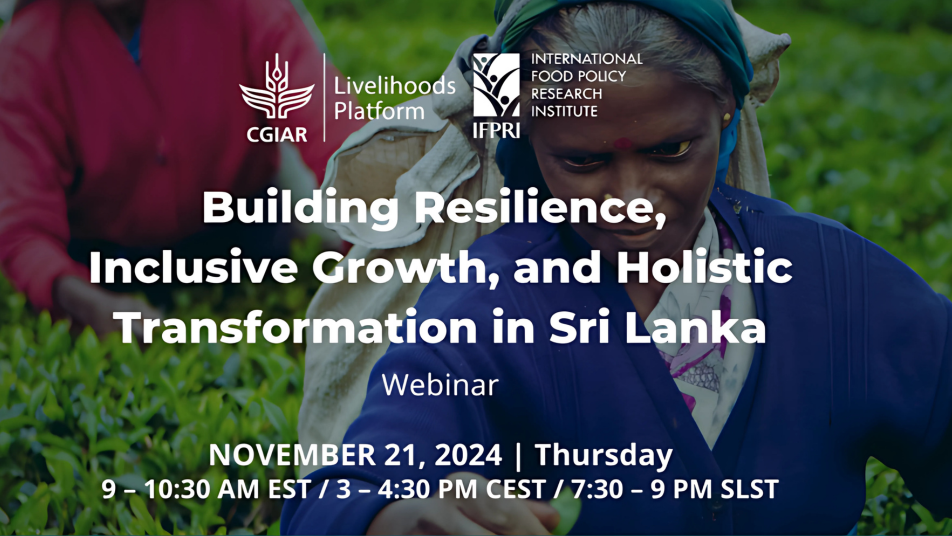





In 2022-2023, Sri Lanka experienced its worst economic crisis since independence in 1948. A debt crisis accompanied by severe foreign exchange shortages resulted in 80% food inflation in mid-2022, major shortages of food, fuel, fertilizer, and other essential goods, a 50% reduction in rice yields, a doubling of the poverty rate, and sharp surges in food insecurity and child malnutrition. In the space of less than a year, Sri Lanka lost a decade’s worth of development.
In March 2024, the Sri Lankan government requested CGIAR support “for economic revival … including innovations that integrate livelihoods, food and nutrition security, and resilience.” In response, the CGIAR launched the Building Resilient and Inclusive Growth and Holistic Transformation (BRIGHT) project under the CGIAR Research Initiative on Poverty Reduction, Livelihoods, and Jobs. The BRIGHT project aims to provide urgently needed evidence on policy options to accelerate economic recovery, strengthen resilience to climate change, and foster greater social inclusion and equity in Sri Lanka. In doing so, it also lays a foundation for collaborative research, policy engagement, and capacity strengthening activities with the Sri Lankan government, development partners, NGOs and private sector organizations.
The first milestone of the BRIGHT project, led by IFPRI, was the implementation of Sri Lanka’s first ever nationally representative multi-thematic household survey, which was conducted between October 2024 and March 2025. Since early 2025, the BRIGHT project was integrated into the new CGIAR Science Program on Policy Innovations.