




Key takeaways
•Policy decisions by fertilizer exporters outside the Persian Gulf region could have significant impacts on global fertilizer markets already reeling from the closure of the Strait of Hormuz, a modeling analysis shows.
•Export restrictions insulate domestic users from high global prices, but amplify global supply shocks by removing physical volume from the marketplace.
•Subsidies shield domestic farmers from high global prices, sustaining consumption but contributing to price increases.
The closure of the Strait of Hormuz amid the outbreak of the Iran war on February 28, 2026, put roughly one-third of global seaborne fertilizer trade at risk. Suddenly, production across the broader Persian Gulf region had no clear ocean exit.
Focusing on two major types of fertilizer, urea and diammonium phosphate (DAP), the closure effectively blocked around 21 million metric tons (MMT) of annual urea export capacity across the Gulf region, including that of Iran, Qatar, and Saudi Arabia, along with another 4 MMT or so of DAP export capacity. The supply disruption drove global fertilizer prices up: through April, world urea prices approximately doubled and DAP prices rose about 35%.
Yet how high prices go, and for how long, depends on more than the strait closure alone. The evolving export policies of the major non-Gulf fertilizer suppliers (mainly export restrictions) and the import policies of large fertilizer importing countries (mainly producer subsidies) are also affecting global supplies and prices.
A handful of administrative decisions, often opaque and made with little or no advance notice or explanation, can move world prices by hundreds of dollars per ton. As we saw in the grain and vegetable oil markets following Russia’s invasion of Ukraine in 2022 or with the rice market in 2023, countries often resort to export restrictions to ensure sufficient supplies for domestic consumers, and further shorting global markets. Meanwhile, India and Pakistan, the world’s largest fertilizer importers, along with many other countries, run subsidy schemes that insulate their farmers from shifts in world prices, limiting changes in global demand that can lower prices.
Amid the current spike, such decisions could drive fertilizer prices higher still, or help lower them. In other words, whether urea peaks at $700 or $900 per MT—and exactly how the shock will affect agricultural production and food security—may very well depend on the policy choices these countries make in the next several months.
An earlier blog post by Arita and Glauber described the Hormuz disruption as a fertilizer supply shock that would likely have limited impacts on grain markets and food prices more broadly. This is a different kind of shock than the last one, triggered by the Russia-Ukraine war in 2022, which disrupted fertilizer supplies while food prices were considerably higher than today. This post further explores the nature of the current shock, employing an economic model to quantify and compare impacts of various supply- and demand-side policies across key fertilizer exporting countries beyond the Persian Gulf and major importing countries—finding that these can have significant impacts of fertilizer prices.
Restrictions on fertilizer exports across different regions
Restrictions on traffic through the Strait of Hormuz have effectively choked off supplies from the Persian Gulf, the world’s largest fertilizer producing and (until recently) exporting region. Here again we focus on urea and DAP, two of the most widely traded fertilizer ingredients. The Gulf countries account for roughly 40% of global urea exports, with Iran the largest exporter (despite incomplete official reporting due to sanctions), followed by Qatar and Saudi Arabia, contributing approximately 21 MMT of annual export capacity collectively. The Gulf accounts for 23% of global DAP exports, with Saudi Arabia, led by Maaden, the largest producer, accounting for approximately 6 MMT of phosphate fertilizer production capacity. A planned expansion to 9 MMT under the Phosphate 3 project is not yet operational, with production expected to begin in 2027. As discussed in Arita, Wang, and colleagues at North Dakota State University (NDSU), sulfur, a critical input to phosphate production globally, is also heavily concentrated in Gulf production. The disruption therefore propagates through Moroccan and Chinese phosphate operations even though those producers are geographically distant from the strait.
Other key fertilizer exporters, meanwhile, maintain export restrictions. As we saw in the grain and vegetable oil markets following Russia’s invasion of Ukraine in 2022 or with the rice market in 2023, countries often resort to such restrictions to ensure sufficient supplies for domestic consumers, and further shorting global markets.
China, Russia, Egypt, and Indonesia together account for roughly 35% of global total exports and 47% of non-Gulf nitrogen and phosphate exports in 2020-2021, according to data from S&P Global Trade Atlas. All four countries have implemented some form of export quotas or restrictions since then, largely taken to maintain lower domestic prices. Their combined posture determines how much residual supply reaches world markets. Figures 1 and 2 show exports across these four countries from 2000 to 2025, revealing significant tightening during 2022-2024 in both nitrogen (urea and ammonium nitrate) and phosphate (MAP—monoammonium phosphate—and DAP) fertilizer markets.
China maintains tight control over fertilizer trade through export restrictions, customs inspections, and import quotas aimed at prioritizing domestic supply and stabilizing prices. Chinahas operated an administrative export control and inspection regime (CIQ)since late 2021 to adjust fertilizer export volumes in response to domestic price conditions. Controls were binding through 2022-2024. Urea exports fell from about 5-6 MMT in 2021 to just 0.26 MMT in 2024, while DAP exports declined from a pre-restriction baseline of about 6.2 MMT per year to 4.6 MMT in 2024. In 2025, the regime shifted toward a more structured quota-based system with guidance pricing, allowing a partial recovery in exports. Urea exports rose to 5.8 MMT in 2025.
Russia has been moving in a more permissive direction even as other exporters have tightened. However, its quota system remains a structural lever Russia could pull tighter if circumstances changed. Russia introduced biannual urea and ammonium nitrate export quotas in December 2021, and has extended them repeatedly since then. The current quota for December 2025-May 2026 is set at about 18.7 MMT. In April 2026, the government announced a further increase to 20 MMT for June-November 2026, including roughly 8.7 MMT for nitrogen fertilizers and over 7 MMT for compound fertilizers, alongside a separate 4.2 MMT quota for ammonium nitrate.
Egypt maintains two main structural limits on fertilizer exports. It curtails fertilizer production seasonally, as natural gas is reallocated to the power sector during summer peak demand. A longstanding domestic supply obligation requires producers to allocate 55% of output to the local market, with the remaining 45% permitted for export. The September 2025 gas price reform adjusted this balance by raising the export share to 55% and reducing the domestic allocation to 45%, tightening local supply conditions. Periodic plant shutdowns due to interrupted Israeli liquefied natural gas (LNG) imports, most notably in May 2025 and June 2025, temporarily halted Egyptian urea output (LNG being a key input in urea production) before deliveries were resumed and operations restored.
Indonesia is positioned as a swing supplier during the Hormuz crisis, as the state-owned Pupuk Indonesia is the largest urea producer in the Asia-Pacific region. Several countries have requested supply. While the country’s Presidential regulation Perpres 113/2025 prioritizes domestic urea supply ahead of export licensing, an export quota of approximately 1.5 MMT can be deployed flexibly depending on domestic conditions. Indonesia therefore represents swing capacity that can move in either direction depending on policy priorities.
Figure 1
Figure 2
Estimating the impacts of export restrictions
Here, we analyze the effects of different export restriction policies in the global urea and DAP markets on trade flows and prices. This analysis is based on modeling of the global fertilizer market by Arita and NDSU colleagues (full model documentation is available here). They estimate the impacts of the closure of the strait on fertilizer markets and consider several scenarios of how fast the conflict would be resolved. The model results assume that the strait remains contested throughout much of 2026, with trade flows returning to about 50% of normal by August, gradually improving to 75% of normal by early 2027. Under the baseline assumptions, export restrictions by China, Egypt, Indonesia and Russia in 2024 remain in place.
Three alternative scenarios show differing outcomes depending on future policy changes:
- Relaxing existing export restrictions on urea and DAP. Existing urea restrictions roll back to the 2019-2021 pattern. China resumes normal urea export volume (+5 MMT); Indonesia returns to pre-Perpres volumes (+0.7 MMT); Egypt relaxes gas curtailments (+0.4 MMT); Russia, already exporting near pre-war levels, contributes no marginal change in urea exports. Under this scenario, approximately 6.1 MMT of urea returns to world markets relative to baseline.
For DAP exports, China returns to pre-2022 export levels and Russia continues to export at current levels. Under this scenario, DAP exports increase by 1.6 MMT relative to baseline in 2024.
This scenario would quickly result in lower urea and DAP prices. Urea prices (Figure 3) fall back below pre-crisis levels by early 2027, compared to the baseline scenario in which they remain above prewar levels through the end of the year. For DAP, a similar pattern across scenarios is observed (Figure 4). Relaxing China’s export restrictions on DAP brings some relief in global DAP prices, though they do not fall back to pre-crisis levels. - Small increase in export restrictions. Under this scenario, Egypt’s gas curtailments deepen modestly (-0.3 MMT); Indonesia formally caps exports rather than continuing flexible deployment (-0.2 MMT); Russia limits exports by an additional 0.5 MMT. China does not adjust its exports. The increased restrictions result in a total reduction in urea exports of 1 MMT.
Under this scenario, China reduces DAP exports by 1 MMT from baseline levels.
The small increase in restrictions would raise urea prices by $29/MT above the baseline projections. If China were to cut back further on DAP exports under this scenario, prices could rise by about $68/MT. - More severe increase in export restrictions. Each country takes one further step. Russia tightens its quota system and pulls back roughly 2 MMT of urea from its 2024 level of 8.2 MMT, effectively returning to prewar volumes (~6 MMT); Egypt deepens gas curtailments, withdrawing approximately 1 MMT; China has limited remaining tightening room; Indonesia tightens its export license cap to ~1 MMT, removing 0.5 MMT. The total decline in urea exports is approximately 3.5 MMT, 7% of global urea trade.
Under the more severe scenario, China reduces DAP exports by 2.5 MMT and Russia reduces its exports 0.3 MMT from baseline levels.
This scenario results in an increase in urea prices of $134/MT over the baseline; DAP prices could rise $224/MT.
Figure 3
Figure 4
Estimating the impact of subsidies on global fertilizer prices
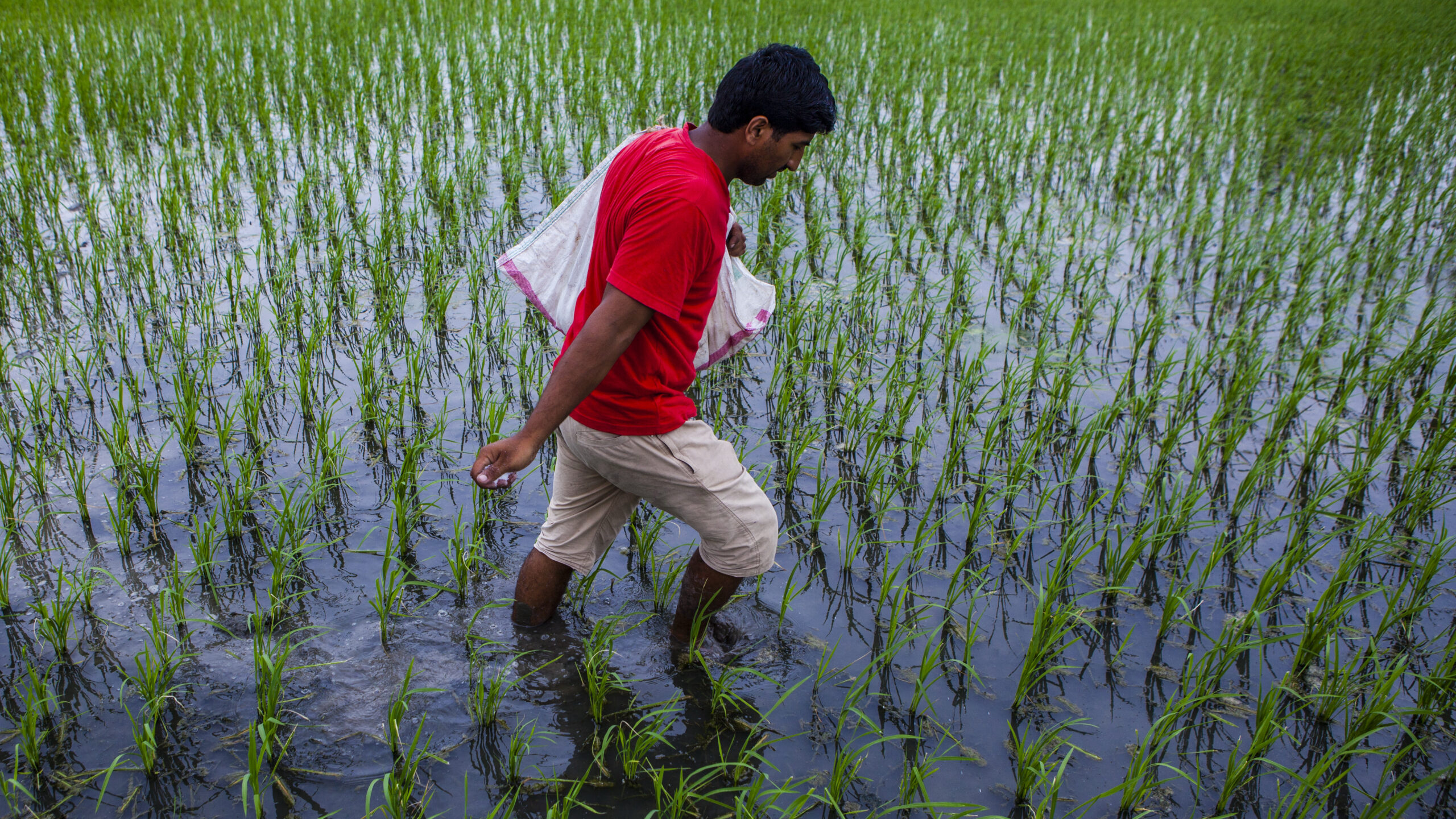
An increase in global fertilizer subsidies can also exacerbate global fertilizer prices, this time by insulating producer demand that would otherwise decrease in response to global price increases, the analysis shows.
Under the baseline scenario, we assume current subsidy policies, specifically those in the major fertilizer importers India and Pakistan, remain in place. India’s Nutrient-Based Subsidy regime fixes urea retail prices, while government payments cover the gap between farmgate cost and world prices. Pakistan’s fertilizer subsidies similarly insulate its producers from price increases. By contrast, unsubsidized importers—including countries in Latin America, particularly Brazil, and in Southeast Asia—absorb the bulk of demand adjustment when global supply contracts. Because India alone accounts for almost 20% of global urea imports, the insulation of its demand has meaningful spillover effects on world prices.
Two alternative scenarios were modeled, one showing a modest increase in prices, the other a modest decrease:
- Capping fertilizer subsidies at 2022-23 levels. Under this scenario, India caps its overall fertilizer subsidy expenditure at fiscal year 2022-23 levels. Indian farmers still benefit from roughly $32 billion in fertilizer subsidies, but they remain exposed to the current spike in fertilizer prices due to the closure of the Strait of Hormuz.
The impacts of this scenario are relatively modest, with urea prices falling only 1%-2% from baseline levels (Figure 5). The impacts largely reflect the fact that Indian subsidies are already quite large and projected increases in subsidies due to the crisis would likely have small impacts on overall demand. Similarly, this lowers DAP prices (Figure 6) by about 2.5% from baseline at the peak in October 2026, a reduction of roughly $21/MT. - Expansion of fertilizer subsidies to fall planted production in South America and Southeast Asia. Under this scenario, governments provide new fertilizer subsidies to insulate producers. In the Southern Hemisphere, this covers producers planting in late fall; in Southeast Asia, producers planting second- and third-season rice crops. In the model, this import demand for these regions becomes more insulated from fertilizer price increases, effectively removing additional demand-side adjustment capacity from the global market.
This would increase urea prices only modestly, by as much as 5% over baseline levels by the fall ($55/MT). It raises DAP prices by about 2.2% over baseline at the peak, an increase of roughly $19/MT.
Overall, the full spread between the Indian pullback and broad insulation scenarios reaches about $40 per MT in late 2026 and narrows steadily through 2027.
Figure 5
Figure 6
Export restrictions vs. fertilizer subsidies
Our analysis suggests that increasing export restrictions has far larger potential impacts on fertilizer prices than an expansion of fertilizer subsidies. There are a number of explanations for this.
First, an export restriction and a subsidy operate on different parts of the equilibrium. An export restriction removes physical tonnage from world markets, a quantity shock the market must clear through higher prices. Subsidies insulate domestic demand from high global prices. Typically, shifts in quantity move equilibrium prices more than changes in the demand slope of comparable economic magnitude.
Second, much of the global demand for fertilizer is already insulated. India, as the world’s largest urea importer at 8-10 MMT annually, anchors the demand side. As the subsidy system shields farmers, domestic prices are highly inelastic in response to changing fertilizer demand, and usage barely moves with world prices. Extending insulation to additional regions therefore adds only modestly to a market where the largest demand block already does not respond to price shifts.
Third, supply cannot adjust in the short run. Relatively inelastic supply reflects the fact that expanding production capacity takes time: new ammonia plants take three to five years to build, and existing plants typically run at 85%-95% utilization during peak pricing periods. There is no spare capacity to absorb a quantity shock.
As a result, removing a few million tons from trade via export restrictions is estimated to lift global prices more than spending a comparable fiscal amount on subsidies. Quantity shocks carry more force when supply cannot expand quickly and demand is partly shielded.
Conclusions
As we have seen during other shocks including the 2007-08 food price crisis, the COVID-19 pandemic in 2020-2021, and the Russia invasion of Ukraine in 2022, government policies such as export restrictions or import subsidies can exacerbate price increases. Closing off supplies from Persian Gulf countries amplifies the price effects of decisions by smaller producers. Thus, a decision by Russia or China to relax current export restrictions could significantly reduce global price levels, helping to mitigate the impacts of closing of the Strait of Hormuz. Conversely, if major non-Gulf suppliers reduce exports, that would trigger sharp price increases above what we have already seen. Moreover, actions by one country to restrict exports can precipitate similar actions by other exporters, as seen in the above-mentioned crises.
An increase in global fertilizer subsidies (above baseline levels) also can contribute to higher global prices, though the impact is generally more muted than that of export restrictions. Subsidies keep domestic fertilizer prices low, which may prevent declines in fertilizer usage and crop yields, though only for those producers who directly benefit from the subsidies. Other producers (for example, in countries that do not provide subsidies) pay higher prices for fertilizer inputs, which could lead to lower fertilizer application rates.
Taken together, the results highlight two distinct policy channels through which the market impacts of the Hormuz disruption can be amplified or attenuated.
On the supply side, the export postures of China, Russia, Egypt, and Indonesia determine how much residual product reaches world markets; on the demand side, the subsidy regimes in India and other large importers determine how much of the price signal reaches farmers. The two levers operate through different mechanisms: quantity shifts in trade volumes on one hand, slope changes in demand response on the other. Our simulations indicate sharper price effects for the export channels—but neither channel can be ignored. The next Chinese quota announcement, the trajectory of Russian quota extensions, and the path of Indian fertilizer subsidy outlays through late 2026 are critical market signals for whether fertilizer markets stabilize or move further into amplification of price pressures.
Lastly, our analysis says little about the potential impact of higher fertilizer prices on crop productivity. To the degree that higher prices reduce fertilizer use, crop yields could be affected. One criticism of fertilizer subsidies is that subsidies encourage over-fertilization. Cutting back subsidies could lead to less fertilizer usage, but have only small impacts on crop yields. Conversely, higher fertilizer prices will likely encourage more efficient use of fertilizer through soil testing, variable application rates, and other technologies.
Shawn Arita is Associate Director of the Agricultural Risk Policy Center at North Dakota State University; Ming Wang is a Junior Research Economist with the NDSU Agricultural Risk Policy Center; Joseph Glauber is a Research Fellow Emeritus with IFPRI’s Director General’s Office. Opinions are the authors’.