





Food systems, economies, and rural life in Latin America and the Caribbean (LAC) have changed profoundly over the past five decades. Looking forward, the region now faces many challenges, including a rise in extreme weather events, rapid urbanization, resource degradation, and geopolitical tensions. IFPRI’s 2025 Global Food Policy Report(GFPR)—marking the institute’s 50th anniversary—explores these risks and identifies opportunities for equitable and sustainable paths forward for LAC.
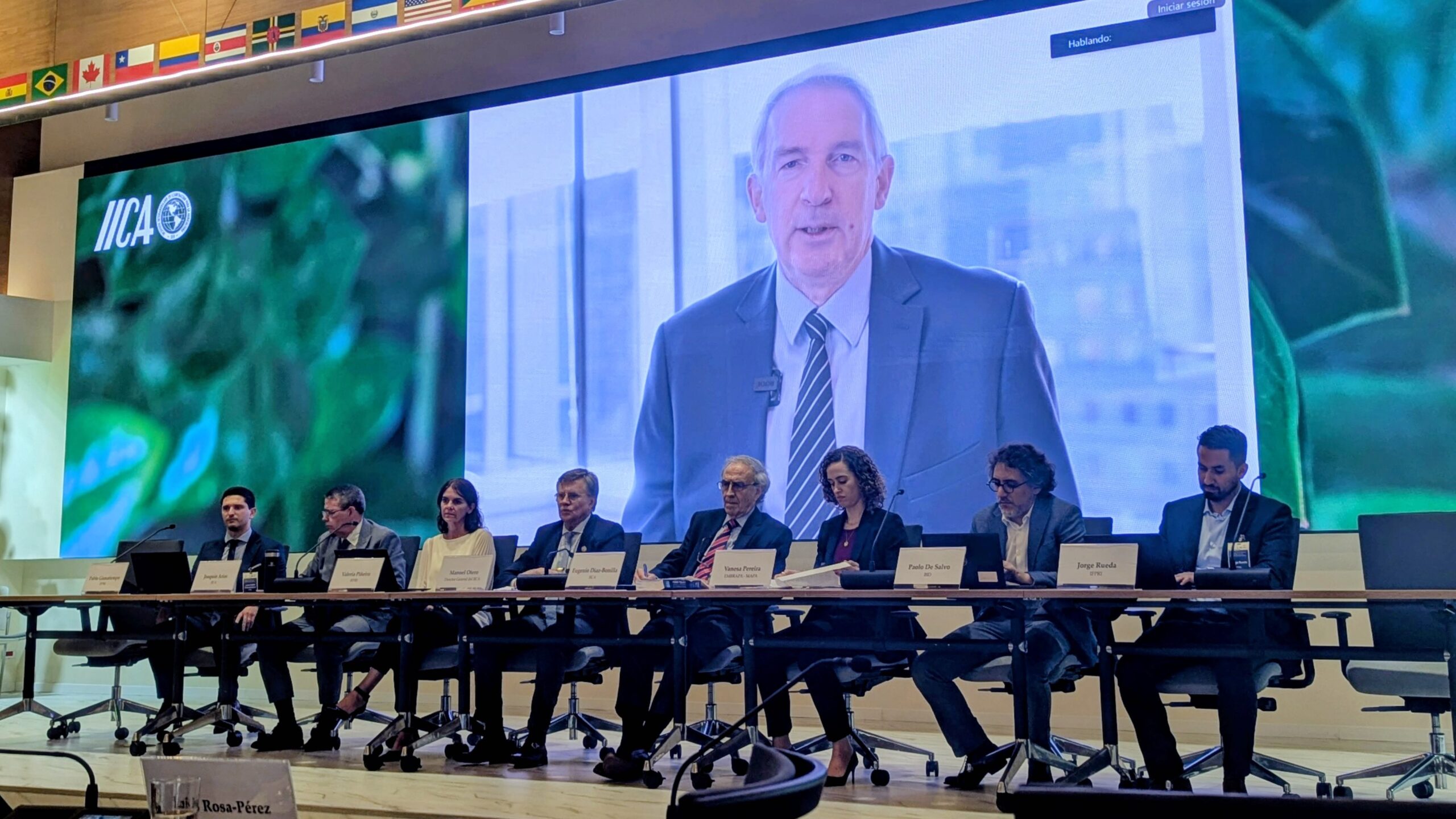
An October 8 policy seminar at the headquarters of the Inter-American Institute for Cooperation on Agriculture (IICA) in San Jose, Costa Rica, commemorated IFPRI’s anniversary and served as a launch event for the GFPR. The event brought together experts from IICA, IFPRI, and partner institutions to explore transformative and scalable policy experiences shaping the region’s future.
Manuel Otero, IICA Director General, emphasized the urgent need for a global shift toward evidence-based policymaking. IFPRI, he said, had made significant contributions over the past five decades in advancing agricultural development and food security through rigorous research and strategic partnerships.
Johan Swinnen, IFPRI Director General, stressed the importance of building strong, multi-stakeholder dialogues that bridge research and practice: Transforming agrifood systems requires not only sound evidence but also inclusive engagement with diverse groups to ensure that solutions are relevant, equitable, and effective in addressing complex challenges such as undernutrition and malnutrition.
Valeria Piñeiro, IFPRI’s Regional Representative for LAC and Senior Research Coordinator, highlighted key lessons and priorities for a changing world that have emerged from IFPRI’s 50 years of work. Once these priorities are identified, foresight analysis, such as ongoing work on the MERCOSUR Outlook initiative, can be applied to determine the best strategic pathways for transforming agrifood systems. She also emphasized that initiatives like Avanzar2030—a joint IFPRI-IICA-Juno Evidence Alliance project that seeks to identify promising policies, technologies, and institutions for transforming LAC food systems—can align policy action with research-based solutions to better pursue long-term development goals.
Eugenio Díaz-Bonilla, IFPRI Visiting Senior Research Fellow and Special Advisor to IICA, presented key insights from the 2025 GFPR for the LAC region. He emphasized the urgent need for a systemic approach, one that considers the interconnectedness of the entire agrifood system. He emphasized the importance of shifting financial flows, both within and outside of food systems, to align with food systems objectives. Another lesson, he said, is the importance of building broad political coalitions to support and sustain effective policies over time, ensuring long-term impact and resilience.
Juan Pablo Gianatiempo, IFPRI Research Analyst, and Vanessa Pereira, Adviser, Brazil Ministry of Agriculture (MAPA), shared insights from the second Mercosur Outlook—a forward-looking report on challenges and trends in agricultural production and trade in the Southern Cone, organized by the Buenos Aires Grain Exchange with the support of the CGIAR under the Policy Innovation Science Program and the collaboration of IFPRI, Embrapa, MAPA, and the Office of Planning and Agrifood Policy of Uruguay. This foresight analysis, they said, serves as a critical foundation for evaluating future scenarios and identifying opportunities to enhance the effectiveness of strategic policies. They highlighted the increasing demand of maize for biofuel production in Brazil and the rising cereal production in Uruguay due to the strategic investments in irrigation infrastructure and improved water management practices.
Finally, Jorge Armando Rueda Gallardo, IFPRI consultant, and Carmine Paolo De Salvo, Rural Development Specialist, Inter-American Development Bank, shared insights from Avanzar2030. One is the need to align green finance flows with sectoral agricultural initiatives to ensure the effectiveness of environmental sustainability actions across the region.
The seminar underscored the shared commitment of IFPRI, IICA, and their partners to advancing evidence-based, inclusive, and forward-looking agrifood policies in LAC. This will require fostering collaboration across institutions, integrating foresight and innovation into policy design, and mobilizing financial and political support to achieve sustainable transformation. Initiatives like Avanzar2030 exemplify this collective effort—bridging research, policy, and practice to build more resilient, equitable, and climate-smart agrifood systems for the region and beyond.
Juan Pablo Gianatiempo is a Research Analyst with IFPRI’s Markets, Trade, and Institutions (MTI) Unit; Jorge Armando Rueda Gallardo is an IFPRI consultant; Valeria Piñeiro is IFPRI’s Regional Representative for LAC and MTI Senior Research Coordinator. Opinions are the authors’.