



With a ceasefire declared in the war on Gaza and a peace plan unfolding, attention is turning to the formidable task of rebuilding the Gaza Strip’s shattered infrastructure. Residents continue to face immediate challenges of obtaining water, food, and power. Equally important, the war also accelerated the destruction of the natural resource base essential for producing food in Gaza, with spillovers in the West Bank. According to a June 2024 Interim Damage Assessment by the UN Environment Programme (UNEP), this includes the widespread contamination of soils, water, and air; the destruction of agricultural infrastructures, such as trees, greenhouses, wells, and irrigation systems; and estimated damages to more than 95% of Gaza’s croplands (Figure 1).
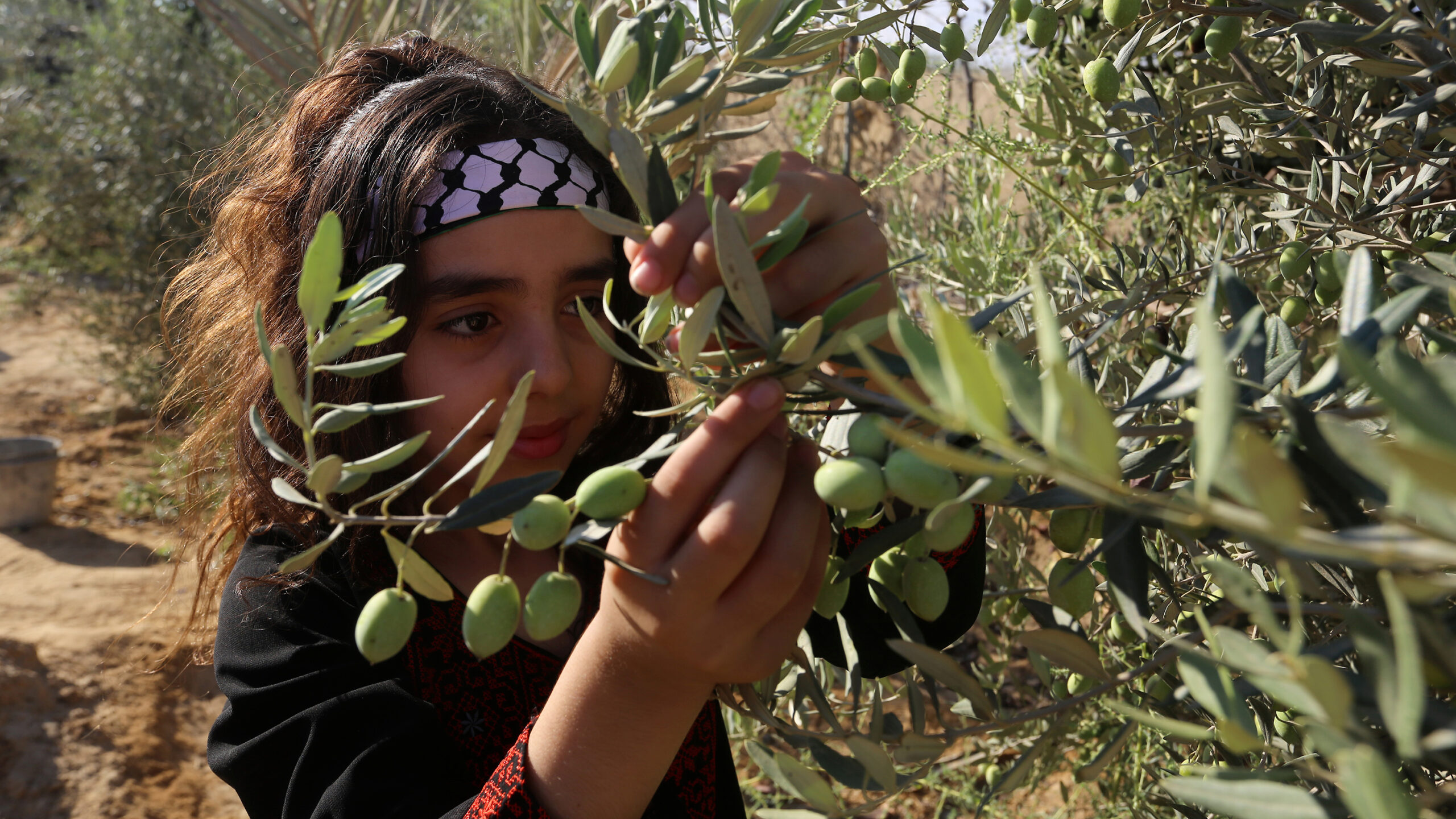
Amid this broad destruction of natural infrastructure, the plight of Gaza’s olive trees stands out. Bombings and other attacks have decimated this vital cultural and economic resource, while fleeing farmers have been forced to abandon remaining olive and fruit orchards. It is unclear what they will find when they return.
The fragile peace offers an opportunity to systematically assess the damage and begin the process of restoring this precious resource. This will require rapid action to preserve what remains and international investment to replant orchards and rebuild the olive economy.
Figure 1

The importance of olive trees to Palestine
The olive tree is a historical pillar of the Palestinian economy and society, and a significant industry in Gaza and the West Bank. About 45% of agricultural lands in the two territories are planted with olives, which also represent 80% of all orchards. Before the war, close to 100,000 Palestinian families in Gaza and the West Bank depended on olive cultivation for their livelihood, including production of olives for pickling, olive oil, and traditional oil-based products like soap. Olive and olive products contributed around 5% of the Palestinian territories’ GDP and 20% of economic output. Gaza accounted for about one-third of olive production, the West Bank for the rest.
The industry has been particularly important for women, who are heavily involved in various stages of the olive value chain, including fair trade cooperatives. Olive trees, including many drought-resistant local varieties, are also more ecologically viable than many of the region’s other crops. Olive trees are also integral to the Palestinian cultural identity and feature prominently in literature, poems, and everyday narratives.
Olive trees also play an important role in carbon sequestration and climate change mitigation, and are an important form of natural infrastructure in this arid landscape: Once planted, they take 5-10 years to produce olives and can then be productive for hundreds of years, as yields don’t necessarily decrease with age. Some olive trees in Palestine might be up to a thousand years old.
The toll on agriculture and olive production
The two-year war is only the latest phase in a decades-long history of Israeli incursions that have cumulatively damaged the olive industry. Palestinian olive orchards have been routinely subjected to appropriations and repurposing of agricultural lands for the construction of separation barriers and Israeli settlements. Sometimes they have simply been destroyed. This has led to the uprooting of hundreds of thousands of olive trees over the past half-century, which Palestinians have countered through continuous re-establishment of plantations on remaining lands. In the West Bank, in areas where olive trees have not been destroyed, farmers often face barriers to accessing their own land due to barricades, movement restrictions, or complex permits to access orchards; this situation has worsened dramatically since the war in Gaza began. Even before the war, access-restricted areas near the boundary with Israel and along the coast affected 35% of agricultural land in Gaza.
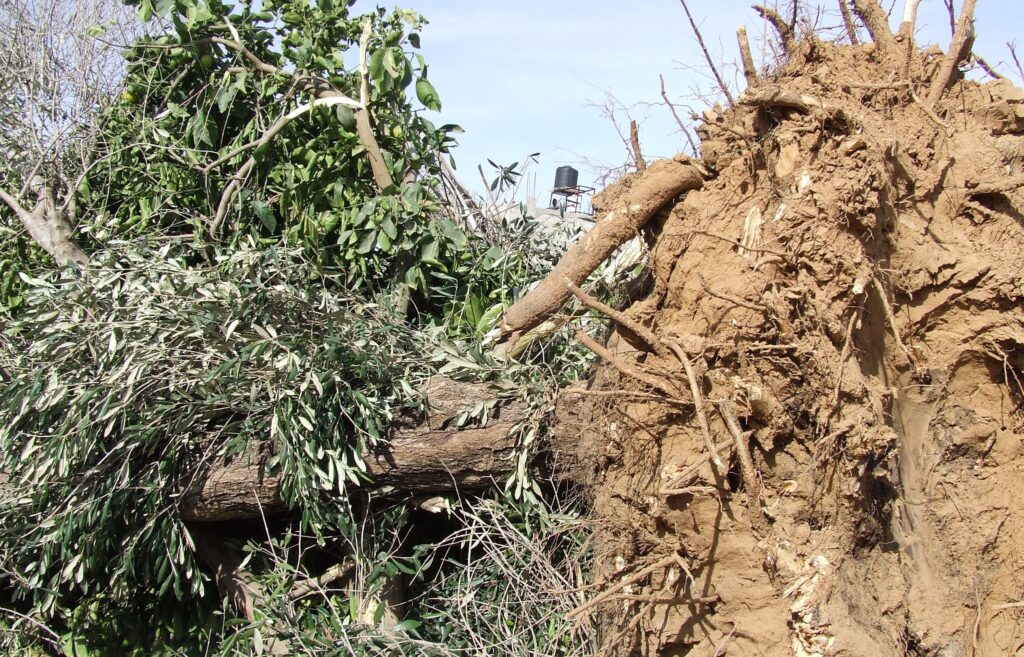
The war accelerated the devastation of olive orchards and other agricultural lands in Gaza. Remote sensing data suggest that by September 2024, 90% and 73% of tree crop fields in North Gaza and Gaza City, respectively, had been destroyed. The war has also severely affected the West Bank’s olive industry, with a marked increase in attacks by Israeli security forces and/or settlers; between October 7, 2023 and December 31, 2024 alone, 276 violent incidents against West Bank farmers were reported—one-third targeting the olive harvest.
A way forward for peace and sustainable rural livelihoods
With a ceasefire now in place, there is an opportunity to restore this important Palestinian natural infrastructure, essential for generating local incomes and sustaining food and environmental security. Palestinians will undoubtedly plant olives anew. To ensure they get the best opportunity to do so, we propose the following immediate actions:
- Document the existence and destruction of olive trees in Palestine. Current efforts to track the status of cropland and agricultural water resources are important and valuable, but a specific focus on olive trees is necessary. Understanding the location of the remaining stock of trees is important for several reasons: To calculate damages and develop compensation requests, to ensure that processing facilities are maintained or redeveloped, and to understand the potential for tree propagation to maintain genetic diversity, which is essential given climatic and other environmental stresses in the region. This effort could be supported by a locally-developed, open-access image database that documents the location of each remaining olive tree.
- Develop measures to preserve the remaining olive tree stock. Such measures could include strengthening tenure rights to olive groves and boosting efforts to protect them (and supporting claims for compensation if trees are destroyed). Such efforts could include the development of an “Adopt an Olive Tree” program, similar to programs that exist elsewhere in the Mediterranean region. Such programs, which typically provide certificates for individual olive trees to adopters, could improve the standing and international recognition of these trees.
- Aim to maximize yield, incomes, and nutrition from remaining olive trees. Key proposed approaches include: Focusing on agroecological and other productive systems to improve the health of soils degraded by the war, including destruction of water resources; co-location of olive harvest processing facilities with remaining trees; and working to ensure that destroyed croplands in both the West Bank and Gaza, including olive groves, are not converted to non-agricultural purposes now that hostilities have ceased. Strengthening tenure rights can play a key role there.
While international attention has rightly focused on the terrible human costs in Gaza since October 2023, the case of Palestinian olive trees reveals much about the extent and complexity of the war’s devastation. The widespread destruction of natural resources in Gaza and the West Bank deserves immediate attention and planning to save what remains—particularly olive trees, given their irreplaceable connection with Palestinian livelihoods.
Hagar ElDidi is a Senior Research Analyst with IFPRI’s Natural Resources and Resilience (NRR) Unit; Ryan Nehring is an NRR Research Fellow; Claudia Ringler is NRR Director. Opinions are the authors’.