


Key takeaways
- The Secured Climate-linked Agri Lending Ecosystem (SCALE) expands access to finance for smallholder farmers often excluded from formal lending—many of them women—and integrates incentives for using climate-friendly approaches.
- The financing model combines incentives that reward farmers for using proven climate-smart practices with credit, insurance, and advisory services.
- SCALE is now seeking partners and investment to expand its reach. For every dollar of grant funding invested, SCALE is expected to mobilize approximately six dollars in climate-smart agricultural investment.
India’s smallholder farmers have only limited access to finance that could help cushion them against a range of shocks. Around 70 million farmers still rely partly on informal credit, while many others struggle to secure loans because they lack the conventional collateral required by formal lenders.
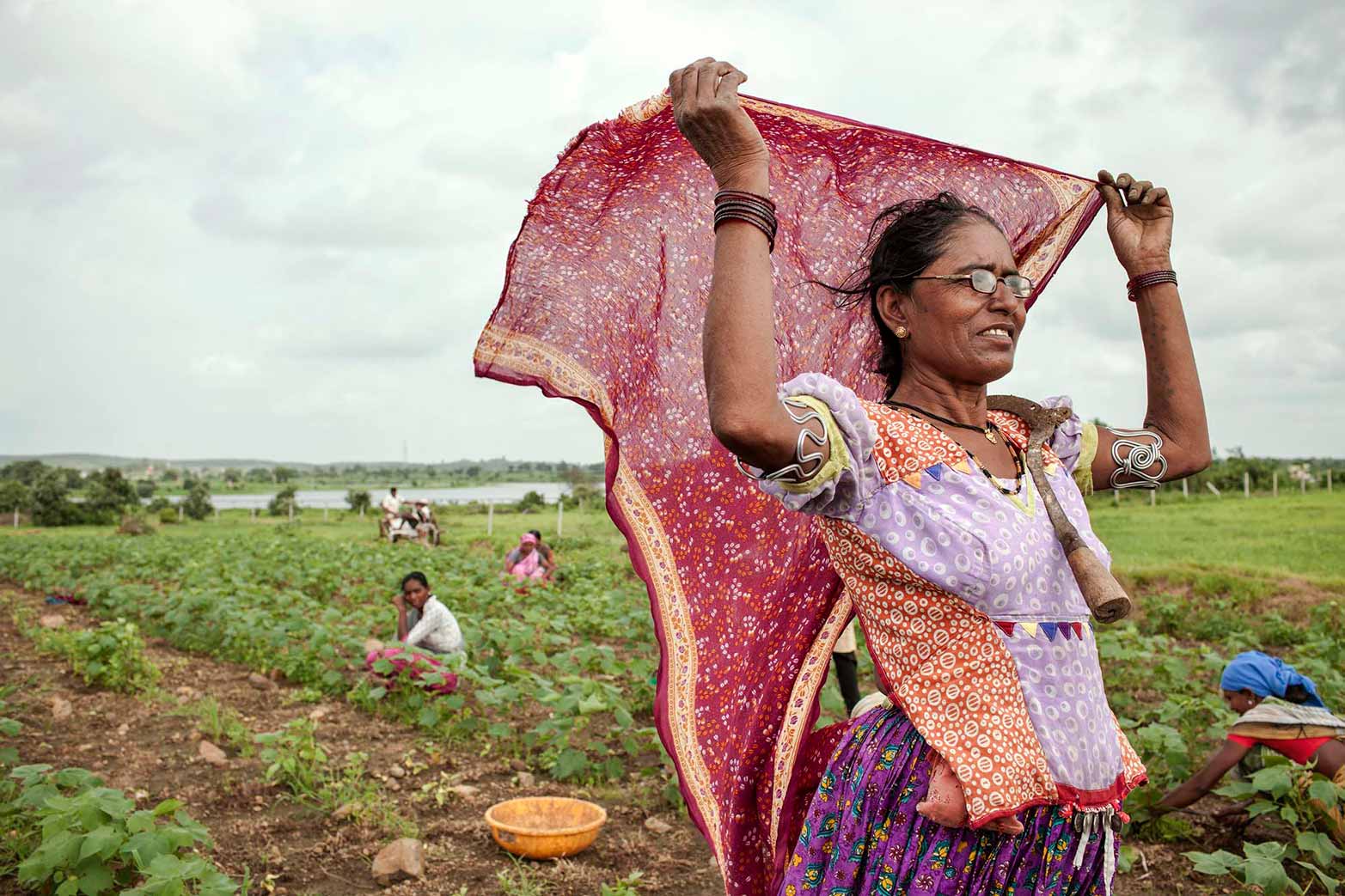
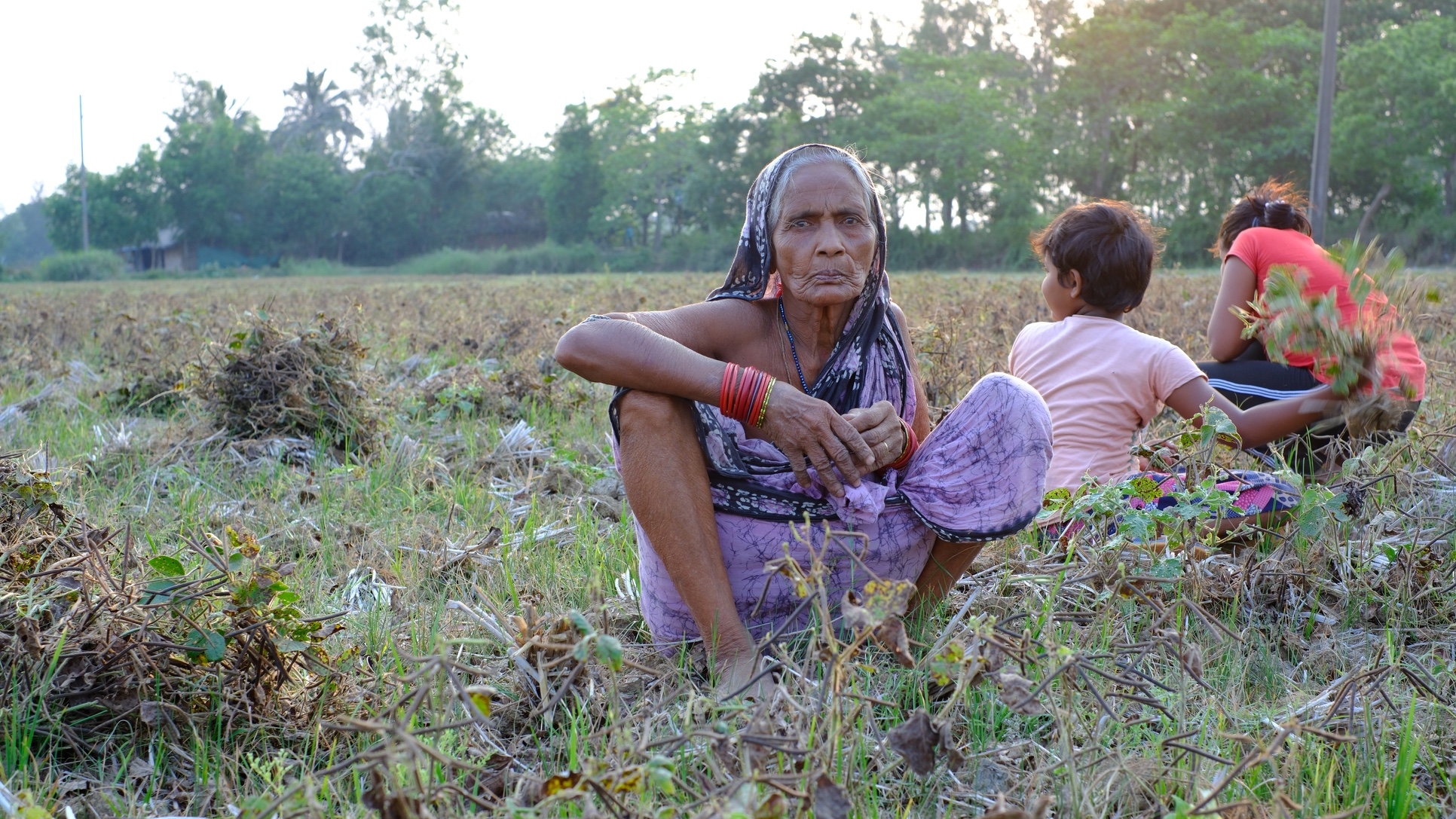
These barriers disproportionately affect women. Despite making up about a third of India’s agricultural labor force, they own only around 11% of farmland and receive just 5% of agricultural credit. Because land is the main form of collateral formal lenders accept, this ownership gap likely limits women’s access to loans. As a result, millions of women farmers remain excluded from the formal financial services needed to invest in more productive and resilient farming practices.
This matters all the more as climate-driven extreme weather, including heat, droughts, and storms, makes agricultural production more uncertain. Farmers need financial services that can help them manage risk and invest in climate-smart agriculture techniques and tools that strengthen long-term resilience. Yet many smallholder farmers, particularly women, are still viewed by lenders as too risky to serve.
For nearly a decade, IFPRI and Dvara E-Registry have worked together to address this challenge. Our collaboration began in 2018 with a question: if satellite imagery and farm-level data can help verify crop outcomes for insurance, could the same information be used to improve access to credit for farmers who lack collateral or formal credit histories?
This idea evolved into KhetScore, Dvara E-Registry’s satellite-enabled credit assessment tool. By using farm-level data to assess risk, KhetScore allows lenders to evaluate farmers based on the productivity and characteristics of their land rather than traditional collateral requirements. Because KhetScore-based loans rely on alternative data rather than land titles, they are far more accessible to women farmers than standard agricultural credit. An IFPRI evaluation of KhetScore-based loans paired with insurance in Odisha found increased formal credit access, reduced difficulty repaying loans, and raised farm profits, with the largest gains in insurance uptake and empowerment among women.
Motivated by these promising early results, Dvara E-Registry expanded its lending activities, facilitating approximately $23 million in loans across five Indian states.
Designing climate finance for smallholders
Recognizing the potential for building climate action into this framework, IFPRI and Dvara E-Registry applied to the Global Innovation Lab for Climate Finance, a climate finance accelerator managed by Climate Policy Initiative (CPI). Over the Lab’s half-year incubation process, the team worked with experts to refine a way to integrate climate-smart approaches into smallholder finance, stress-test assumptions, develop a financial model, and assess potential climate and development impacts.
The result is the Secured Climate-linked Agri Lending Ecosystem (SCALE), an $87.3 million financing model designed to accelerate adoption of climate-smart agriculture among smallholder farmers. What sets SCALE apart from Dvara E-Registry’s lending to date is that it introduces an incentive layer that explicitly rewards farmers for verified adoption of climate-smart practices and technologies, sharing their risk-reducing benefits between financial institutions and farmers.
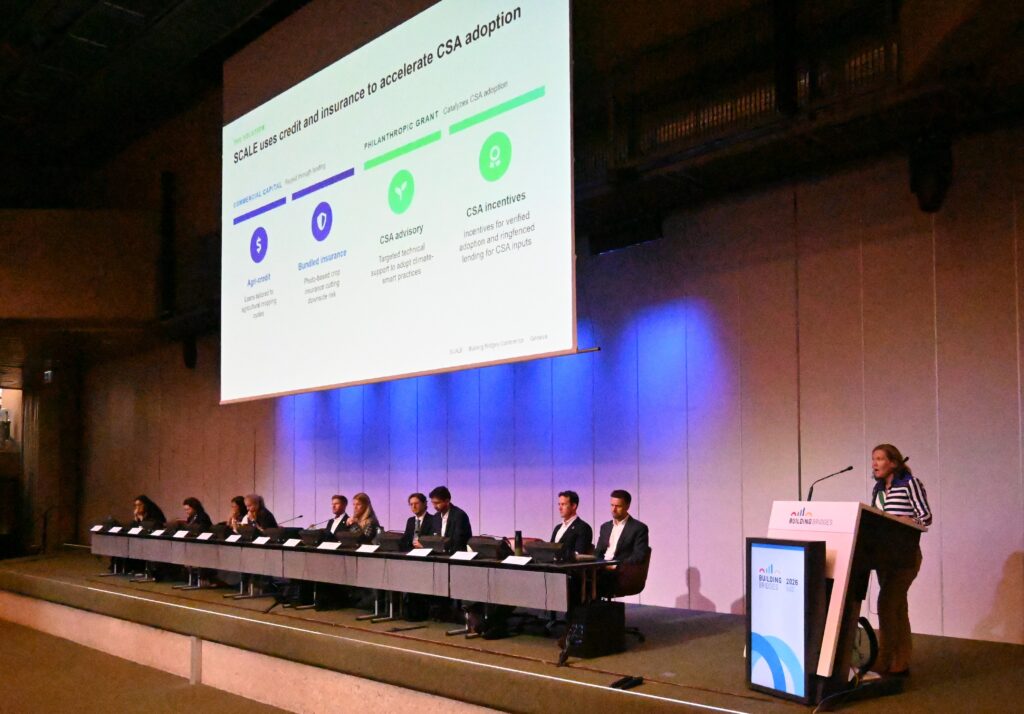
SCALE combines four integrated components. The first two build on Dvara E-Registry’s KhetScore model, while the latter two are novel features designed to address climate risk.
- Credit: KhetScore-enabled lending that expands access to collateral-free agricultural loans with tenures of 12-24 months.
- Insurance: Protection for farmers and lenders against climate-related losses at the farm level.
- Advisory services: Field-based and digital support that supports farmers in adopting climate-smart agricultural practices.
- Incentives: The model’s distinguishing feature rewards farmers for verified adoption of proven climate-smart practices and technologies, such as water-efficient rice cultivation, drip irrigation, bio-inputs, and climate-resilient seed varieties, through discounts on inputs or lower interest rates and insurance premiums.
This design matters for women farmers. Collateral-free loans reach women who do not hold land titles, while advisory services and adoption incentives help them take up practices that reduce their exposure to droughts, storms, and other climate shocks.
In the first few years, grant funding will support insurance subsidies, advisory services, and adoption incentives, helping farmers transition to climate-smart practices. As the model scales and demonstrates commercial viability, we expect to phase out these subsidies, reducing reliance on grant funding over time. For every dollar of grant funding invested, SCALE is expected to mobilize approximately six dollars in climate-smart agricultural investment.
Taking SCALE to Geneva
On October 7, 2026, we presented SCALE at the Lab’s annual Global Endorsement Meeting in Geneva, where investors, philanthropies, and climate finance leaders reviewed the year’s selected solutions. As one of only eight solutions chosen globally, SCALE received endorsement from Lab members, marking the culmination of its incubation process and positioning the model to attract investors and implementation partners for the next phase of growth.
Looking ahead and seeking philanthropic support
Following the endorsement, the immediate focus is implementation. The pilot will be conducted from 2026–2028, testing different incentives to encourage adoption of climate-smart agriculture and generating evidence on the risk-reducing benefits of these practices for farmers, lenders, and insurers. In parallel, IFPRI and Dvara E-Registry will begin mobilizing the $3.3 million in grant capital needed to pilot and later scale the model and are open to financial partnerships and philanthropic support for this next phase.
SCALE aims to reach more than 120,000 farmers over the next five years, expand access to finance for women and other underserved borrowers, and demonstrate that climate-smart agriculture can be integrated into mainstream agricultural lending.
Broadly, SCALE illustrates how research can move beyond generating evidence to shaping investment-ready solutions. By combining evidence-based lending, insurance, advisory support, and incentives for climate-smart agriculture, the model offers a model for helping smallholder farmers, and women farmers in particular, build resilience while unlocking the capital needed to adapt to a changing climate.
Berber Kramer is a Senior Research Fellow with IFPRI’s Markets, Trade, and Institutions Unit and Julie Ghostlaw is a Program Manager with IFPRI’s Poverty, Gender, and Inclusion Unit; both are based in Nairobi, Kenya. Tarun Katoch is Co-Founder and Head of Value Chain at Dvara E-Registry, based in Hyderabad, India. Opinions are the authors’.
This work was supported by the CGIAR Science Programs on Climate Action and Scaling for Impact.