





Key takeaways
- Women dairy farmers in Kenya face growing climate risks but often cannot access the finance needed to adapt and protect their livelihoods.
- A recent gathering brought together farmers, other stakeholders, and finance partners to explore ways to develop digital lending tools and gender-focused finance.
- A proposed climate finance consortium could connect farmers, lenders, cooperatives, and researchers to expand access to suitable climate investments.
Climate change is increasing risks for smallholder dairy farmers in Kenya, many of them women. Heat stress and reduced quantity and quality of fodder harm animal health, resulting in reduced milk quantity and quality. That, in turn, affects human diets, nutrition, and health.
Confronting these risks—ensuring that animals are healthy, farmers see continued income from dairy production, and communities improve dietary diversity through more and better-quality milk products—requires considerable investments in climate adaptation. In addition, another target for climate investment is reducing the greenhouse gas emissions (GHGs) from dairy operations, for instance, installing systems that use GHGs captured from manure to generate renewable energy.
However, smallholders, particularly women, are largely excluded from existing climate finance instruments. Despite growing interest in climate finance, most lending mechanisms are poorly suited to smallholder households, leaving those most exposed to climate shocks without the capital needed to adapt.
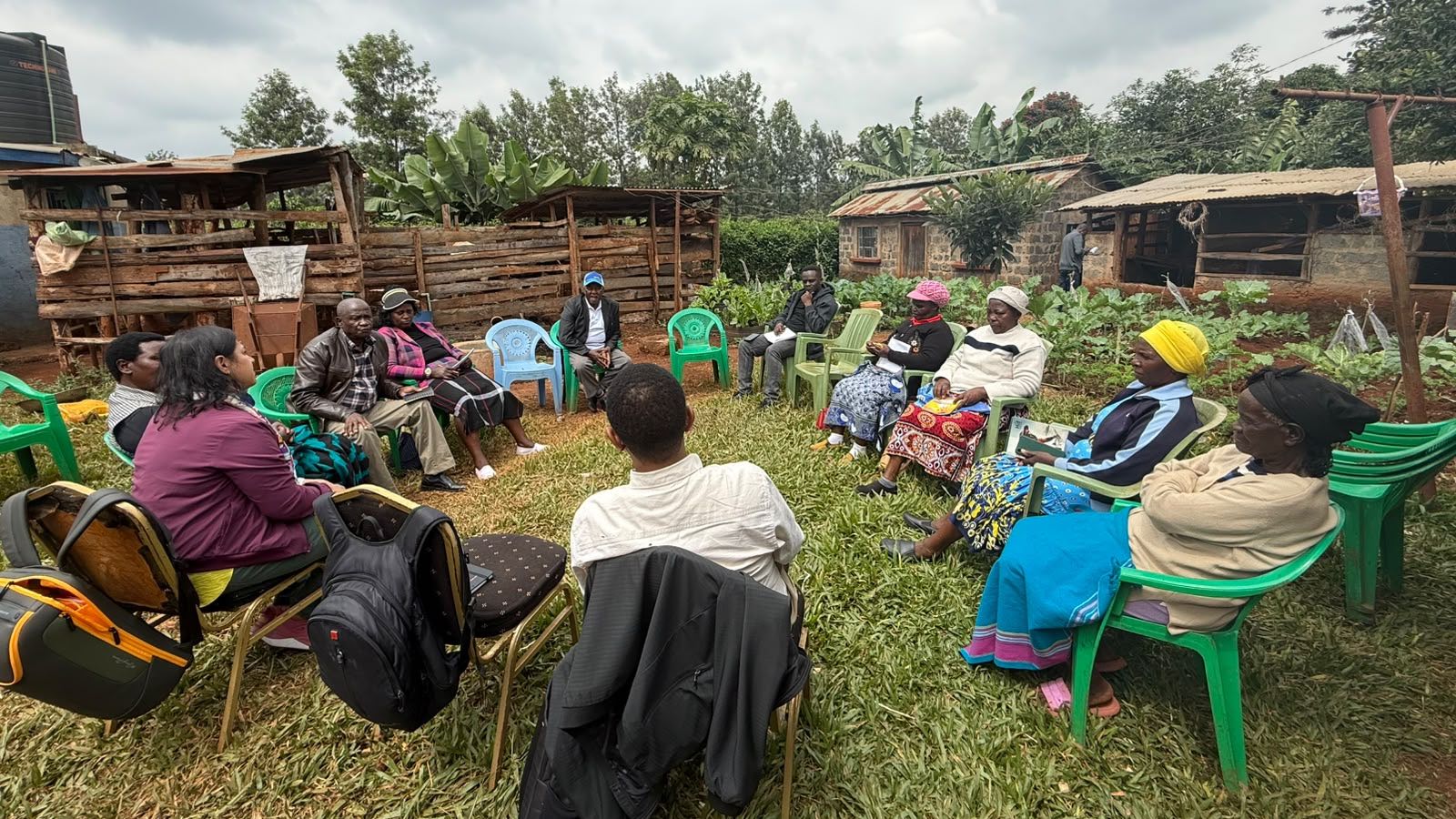
In early July, researchers from IFPRI and the International Livestock Research Institute (ILRI) convened a diverse group of stakeholders and finance partners in Nairobi under the auspices of the CGIAR Climate Action Science Program (CASP) to explore challenges and opportunities in developing financial products to help women smallholder dairy farmers build long-term climate resilience.
The workshop brought together participants including Africa Biogas Programs, Private Equity Support (PES), and Jawabu Biashara, a microfinance company targeting clean energy investments for smallholder farmers in Kenya. Discussions and field visits highlighted persistent gaps in equitable access to finance and identified areas where CASP activities can make the greatest contribution.
Building the right implementation architecture for improving smallholder climate finance requires assembling the right mix of data, institutions, and financial mechanisms to move from isolated, non-sustainable pilot projects to larger-scale sustained investments, participants agreed. While many dairy farmers can access small and medium loans through savings and credit cooperative organizations (SACCOs) or the dairy cooperatives, these loans typically cover only small expenditures such as feed purchases and medical expenses. Financing to address climate-related emergencies, such as widespread animal deaths from heat stress, and longer-term investments in adaptation, such as climate change-adapted stables, remain structurally out of reach.
Diana Gichaga, Founder and Managing Partner at Private Equity Support (PES), emphasized that designing and de-risking credit products that target small and medium-sized enterprises (SMEs)—including many women-owned dairy farms—requires a much better understanding of their financial needs and investment capacity. Yet many of those farms and other SMEs operate with limited documentation, making it difficult for lenders to assess risk.
Similarly, the Managing Director and Founder of Jawabu Biashara, Charles Njoroge, described the challenges his company’s agents face as they collect individual-level information on assets, ownership, and financial history to inform lending decisions. While effective, this process is resource-intensive and difficult to scale. No single organization can overcome these challenges alone, participants agreed. Instead, they proposed a climate finance consortium that would bring together small and large financial institutions, researchers, farmers, cooperatives, and implementation partners with complementary expertise and varying levels of appetite for risk. A memorandum of understanding is currently being developed to define partners’ roles and create a coordinated pathway for reaching women farmers at different stages of financial maturity.
Leveraging digital systems to expand climate finance
The Dairy Intervention for Mitigation and Adaptation (DAIMA) project, a six-year, $350 million initiative spanning Kenya, Rwanda, Tanzania, and Uganda, presents an opportunity to strengthen climate finance through better digital infrastructure. CGIAR scientists collaborating with DAIMA are helping to establish digital monitoring, reporting, and verification (MRV) systems that combine remote sensing, sample farm surveys for validation, and data on productivity, GHG emissions, soil organic carbon, and biogas adoption. This system would allow borrower profiles to be linked to dairy production records already being kept by some households and cooperatives and would give lenders a much richer and more current picture of farmer performance than traditional credit assessments, which typically exclude women.
The dairy sector is a good fit for climate finance because milk sales generate regular and traceable income. Meru Dairy cooperative was cited as an example where financial instruments support not only the primary borrower but also farmers who supply the cooperative.
Dairy production records, ideally linked with cooperative data and personal transactions history through M-Pesa mobile money payment history, were identified as the most valuable input for assessing farmer creditworthiness, potentially connecting directly to the digital MRV system under development.
Clean energy investments, particularly household biodigesters that convert organic waste into cooking fuel, have generated documented benefits for women dairy farmers in Kenya, including cleaner cooking, reduced respiratory symptoms, lower expenditure and time spent collecting fuel wood, and reduced physical strain, thus offering important technology interventions for climate finance support.
Jawabu Biashara was identified as the most suitable partner for an initial pilot that tests these innovative methods because of its existing infrastructure. The organization combines digital analysis of mobile money transactions with in-person assessments to evaluate borrowers, enabling loan decisions within 24 hours while maintaining a detailed understanding of household circumstances.
Early evidence from Jawabu also highlights the importance of designing financial products that intentionally include women. Nearly half of biogas unit beneficiaries were women, and women accounted for an even greater share of water tank investments. Moreover, biogas units performed better in terms of consistent use and lower maintenance issues when women were engaged in the decision to acquire them. The data show that integrating gender considerations in financial product design is not only a matter of equity but can also improve technology adoption and household resilience.
Green finance: From policy to practice
Kenya’s evolving regulatory environment is also shaping climate finance in the country. Since 2022, all banks regulated by the Central Bank of Kenya have been required to develop Climate Risk Management Plans. At the same time, the government’s Green Finance Taxonomy defines what qualifies as “green” finance, requiring financial institutions to align their portfolios with sustainability objectives.
Thus, there is an opportunity to help banks and other financial institutions translate these policy requirements into practical lending approaches, including developing tools to measure and monitor targeted green lending.
Looking ahead
The workshop demonstrated that the building blocks for a climate finance product tailored to smallholder women dairy farmers already exist—but remain fragmented across financial institutions, farmer organizations, researchers, and development partners. Bringing these actors together through a coordinated climate finance consortium could help transform promising pilot initiatives into scalable investment models.
In the coming months, CASP will conduct a climate finance assessment across several counties to understand women’s existing access to formal and informal finance and identify remaining gaps in credit and insurance for both short-term shocks and long-term resilience investments. In addition, CGIAR researchers will continue engaging stakeholders to refine climate finance approaches, aiming to bring together Kenyan and Indian regulators and practitioners to develop a pilot model that could be adapted across the regions—demonstrating strong South-South co-learning and shared experiences in the design and testing process.
Vartika Singh is an Associate Research Fellow with IFPRI’s Agrifood Innovation and Reslience Unit based in New Delhi; Daniel Mulat is a Laboratory Manager with the International Livestock Research Institute based in Nairobi, Kenya; Kevin Kinusu is a Managing Director of the Africa Bioenergy Program Limited (ABPL) in Nairobi; Muzna Alvi is an AIR Research Fellow based in New Delhi. Opinions are the authors’.