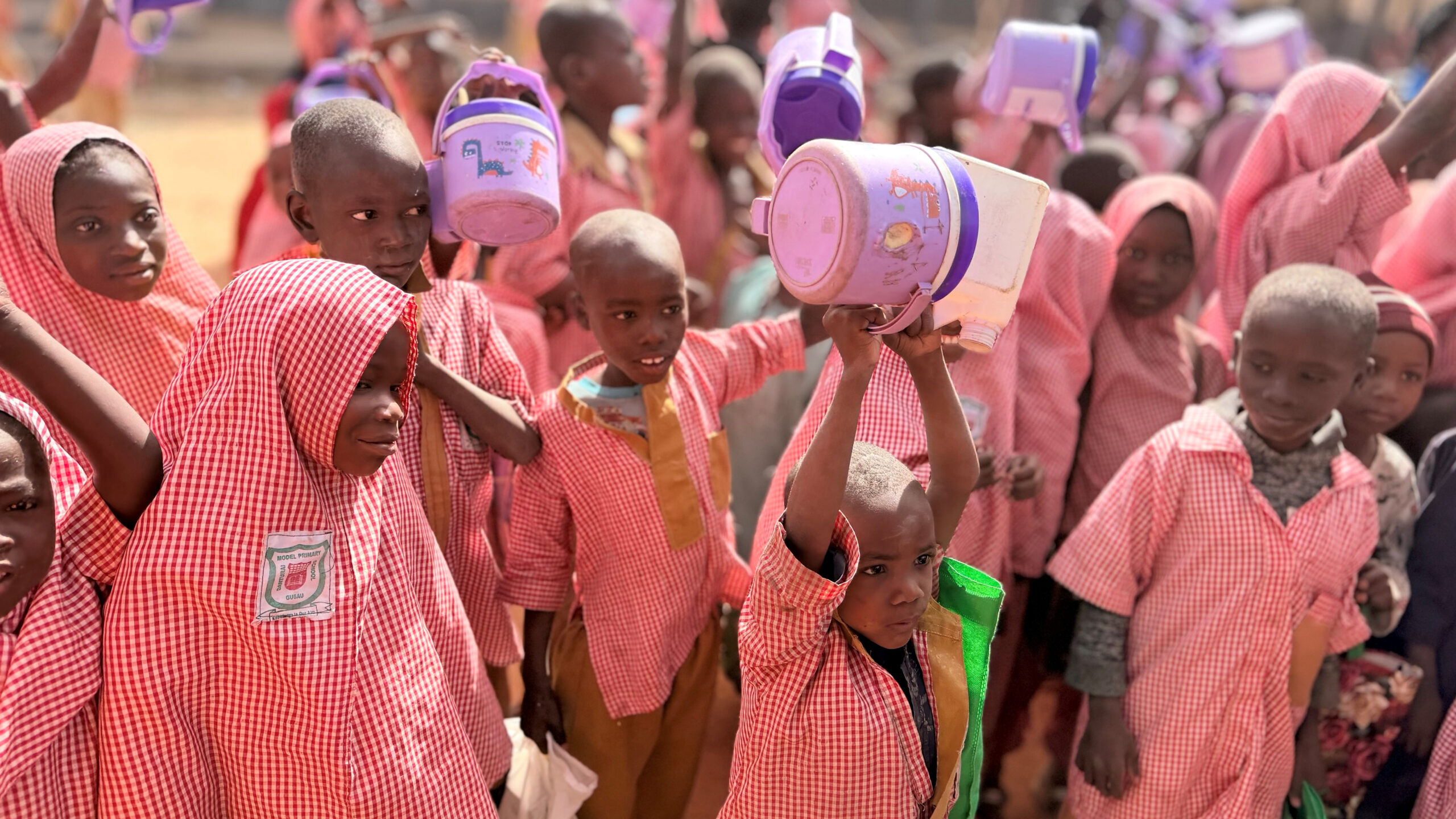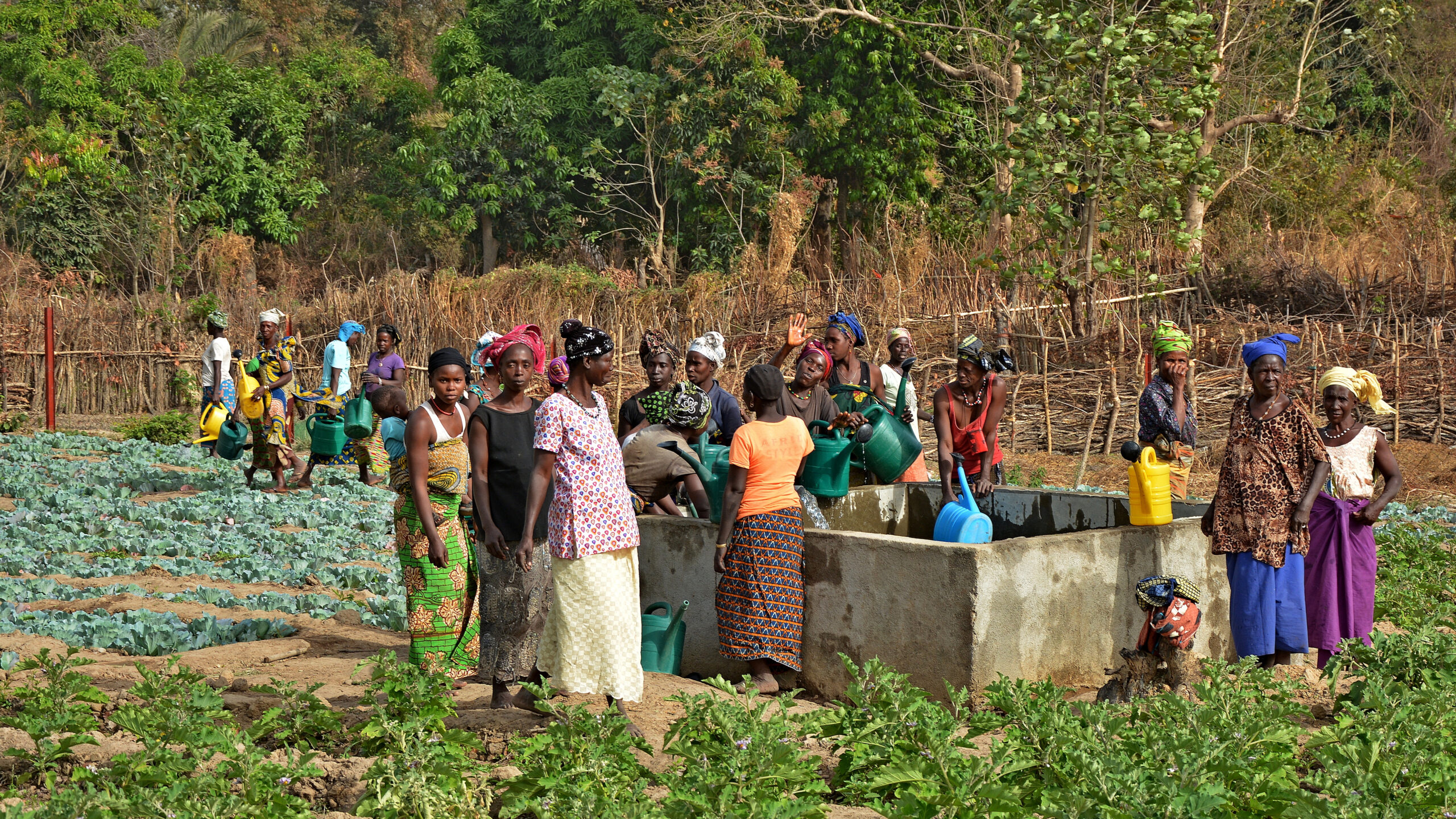






Across fragile and conflict-affected settings (FCAS), mounting evidence shows that gender profoundly shapes both the experience and the trajectory of fragility. Women are more likely to face food insecurity, lose access to income, shoulder unpaid care responsibilities, and encounter elevated risks of violence during shocks—all while being systematically excluded from the decisions that determine relief and recovery. Perhaps not unsurprisingly given these dynamics, of the 343 million people in the world today who are categorized as “extremely hungry,” nearly 60% are women and girls.
These imbalances weaken the resilience of entire communities. But they are not inevitable. Research and practice increasingly demonstrate that when women’s perspectives, leadership, and priorities inform decision-making in FCAS, outcomes improve for households, markets, and local institutions alike.
These challenges and opportunities shaped the discussion at a November 12 IFPRI policy seminar, “Empowerment in Crisis: Gender-Responsive Solutions for Fragile Food Systems.” The event brought together researchers, development practitioners, and policymakers—many with deep experience working and living in FCAS—to examine how crisis response and recovery strategies can more effectively elevate women’s agency, protect their rights, and support their leadership. The event was the latest in IFPRI’s Fragility to Stability Policy Seminar Series, co-organized with the CGIAR Science Program on Food Frontiers and Security (Frontiers Program).
Gender inequality in fragile settings
Anna Okello, Frontiers Program Director, opened the event, emphasizing that crises—whether driven by conflict, displacement, or climate shocks—intensify existing gender inequalities and disproportionately restrict women’s access to livelihoods, safety, and decision-making spaces. Yet she noted that when women have a meaningful voice in shaping crisis response and recovery, communities rebuild faster, more equitably, and with far greater resilience. This intersection of gender, agency, and fragility lies at the heart of current work under the Frontiers Program, which aims to generate evidence and policy guidance that strengthens inclusion and governance in the world’s most crisis-affected food systems.
Okello highlighted the importance of grounding decision-making in data and analysis, pointing to new, actionable insights from CGIAR and others (see presentations below). These efforts, she said, are beginning to generate actionable insights for strengthening inclusion, governance, and resilience across fragile food systems. She urged participants to consider how policies and programming can move beyond protecting women to truly partnering with them so their voices guide the transformation of FCAS.
Afrobarometer’s Josephine Appiah-Nyamekye Sanny outlined the current status of African women’s empowerment across various domains. Gaps persist in women’s leadership, mobility, and economic and political participation—and these widen sharply in areas facing conflict or displacement, she said. While public support for women’s leadership is rising, women’s lived experiences continue to diverge from these aspirations, constrained by discriminatory norms and heightened insecurity. Understanding this divergence, she noted, is essential to designing interventions that expand agency even in the most challenging environments.
Evidence from Nigeria on strengthening women’s empowerment
The seminar then shifted to practical insights from organizations and researchers working directly with women affected by fragility and conflict. Vivian Effem-Bassey described ActionAid Nigeria’s efforts to center women’s leadership and strengthen women’s organizations in FCAS. Empowerment must extend beyond improvements in earnings or assets, she stressed: True empowerment requires shifting power—ensuring that women’s voices shape community decisions, that harmful norms are challenged, and that men are engaged as allies.
Effem-Bassey provided an overview of two 6-month curricula for women and for men that aimed to cultivate women’s empowerment in community decision-making and men’s support for that empowerment. Co-designed by ActionAid Nigeria, IFPRI, and U.S.-based colleagues at the Universities of California at Berkeley, San Diego, and Merced, and Stanford University, the trainings were offered in communities in southwest Nigeria as part of a randomized control trial study.
The women’s curriculum aimed to empower participants with leadership and advocacy skills and improve their ability to articulate and act on group-based preferences and grievances in local civic spaces. The trainings were designed to stimulate group-based political engagement by fostering three psychological mechanisms—a shared sense of injustice, a group identity, and beliefs in collective efficacy.
The men’s curriculum—designed to be delivered in parallel but separate sessions—aimed to educate men about how and why to support women’s participation in decision-making, highlighting the benefits for families and communities of ensuring women’s voice. Novel programming of this kind is essential to transform harmful gender norms and promote equal participation, she said.
Jordan Kyle, IFPRI Research Fellow, presented the observed impacts of the trainings, held monthly over a period of six months. In a randomized controlled trial across 450 Nigerian communities, 5,800 women were recruited into newly formed women’s action committees (WACs). Communities were randomly placed into one of three study arms. Control (150) consisted of basic civic education only, treatment 1 (T1) also included women’s trainings (150), and treatment 2 (T2) also included both women’s and men’s trainings (150).
Leveraging baseline and endline surveys, as well as data from a community grants competition held in all 450 communities, the trainings not only significantly increased both the level and quality of women’s political participation but also improved community leaders’ responsiveness to women. These findings, Kyle noted, underscore the potential for addressing both psychological and structural barriers to advance women’s participation in community decision-making.
Agnes Quisumbing, IFPRI Senior Research Fellow, presented novel research from Nigeria and Nepal on how to make anticipatory action programs—programs triggered by early warning systems that provide assets or cash in advance of a shock or crisis—more gender-responsive. Through qualitative data collection, she explained, her team found that gender responsiveness requires smart design choices from the very start: Making sure early warnings reach women directly, providing aid in forms they can actually use and control, and giving them a seat at the table when programs are being designed. Without these elements, programs often fail to reach women, much less empower them, and negative shocks tend to further exacerbate gender inequalities. But when women are present, their participation improves the whole system’s effectiveness in responding to crises.
Locally-driven and inclusive approaches to crisis response
In the panel discussion, Aletheia Amalia Donald, a senior economist at the World Bank’s Africa Gender Innovation Lab, cited impact evaluations across Africa to show that well-designed programs can deliver strong results even in FCAS. Promising strategies for expanding women’s economic and social participation include: Targeting programs specifically at women’s economic inclusion, integrating psychosocial support, supporting mobile childcare units, establishing safe spaces such as girls’ clubs, and engaging men using fatherhood as an entry point.
Cash and asset transfers can strengthen women’s financial independence and resilience in FCAS by enabling them to pay school fees, support children’s needs, and navigate displacement, said Suzan Gopuk, Senior Technical Advisor at GIZ Nigeria. But this financial support must be paired with efforts to build financial literacy, develop local capacity, and engage communities in program design. Effective programming, she noted, requires context-specific gender analysis and deep engagement with local leaders, religious authorities, and grassroots networks to ensure cultural relevance and community ownership.
Nigeria’s internal conflicts have actively eroded gender equality. Nkechi Ilochi-Kanny, Director of Business Development and Innovation at ActionAid Nigeria, highlighted the need for further research to identify the barriers to gender equality in FCAS in particular—including what particular gender norms and practices are most problematic. Such research, she said, can improve programming carried out by organizations like ActionAid as well as government programming, ensuring they are well-tailored to FCAS.
Moving from crisis response to transformative change
Crises are not moments to pause progress on gender equality; they are moments when rights, voice, and agency matter most. In her closing remarks, Katrina Kosec, IFPRI Senior Research Fellow and interim Lead of the CGIAR’s Fragile and Conflict-Affected Food Systems Area of Work, emphasized that advancing women’s empowerment in fragile food systems requires bridging humanitarian and development divides, strengthening and effectively engaging with local institutions and leaders, and investing in rigorous, context-sensitive evidence. By centering women in crisis response—protecting their rights, amplifying their leadership, and designing interventions that adapt to dynamic conditions—policymakers and practitioners can help ensure that fragile food systems become more resilient, equitable, and inclusive.
Katrina Kosec is a Senior Research Fellow with IFPRI’s Poverty, Gender, and Inclusion (PGI) Unit and Interim Lead of CGIAR’s research on Fragile and Conflict-Affected Food Systems.