


Key takeaways
- Digital tools benefit women in agriculture in a variety of ways. Evidence from multiple countries shows gains in financial inclusion, decision-making power, access to credit, and well-being when services are designed to meet women’s needs.
- Yet access alone does not guarantee benefits. Women gain the most when digital services are affordable, practical, linked to resources, and tailored to their priorities.
- Women should help shape digital innovations. Involving women in the design, testing, and evaluation of digital and AI tools can make them more inclusive and effective.
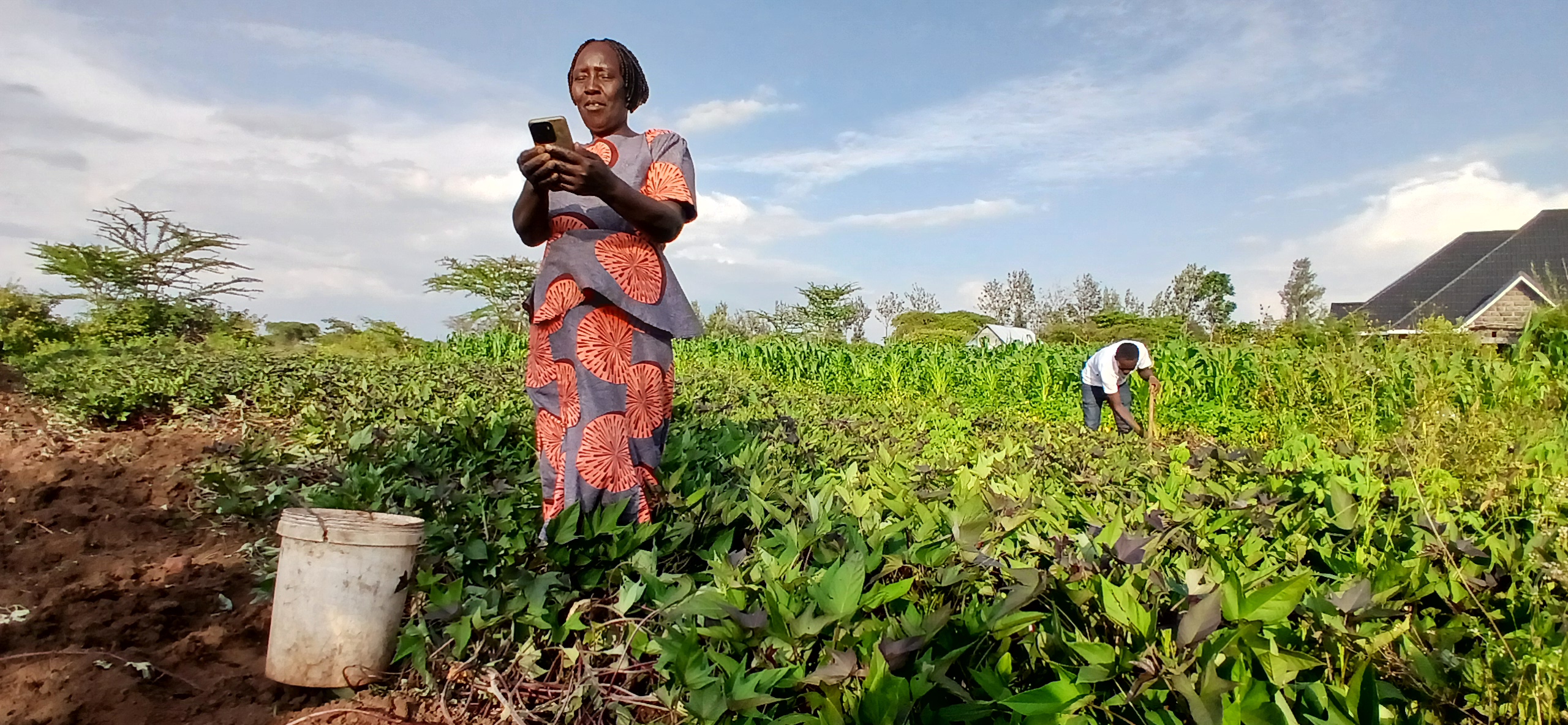
This year’s World Food Day theme is “Innovate today. Nourish tomorrow.” Digital tools are among the most promising agrifood innovations, ranging from video-based extension and mobile money to AI-enabled advisory services offering information on climate, agricultural techniques, or market conditions. These are often promoted as low-cost alternatives that democratize access to agricultural information and expand access to finance.
Yet embracing digital technologies risks reinforcing existing gaps in access to resources and opportunities. Access to and use of digital tools remain highly unequal between urban and rural areas, between richer and poorer farmers and between women and men farmers. Access to electricity, finance, and other resources, as well as literacy and social norms, all shape who can access and benefit from these tools. In low- and middle-income countries, women are 13% less likely to own a smartphone than men, and around 810 million women remain unconnected, largely in rural areas.
If digital tools are to be deployed equitably, then key questions are how they benefit women and where they fall short. Do digital interventions improve women’s agency and well-being, and if so, through which pathways?
These questions are more complex than they appear at first glance. Recent evidence suggests that digitally-enabled services directed toward women can strengthen their agency and financial independence. Yet meaningful inclusion also requires that women be more than passive beneficiaries and take an active role in shaping these technologies for themselves: they must negotiate how tools are used, adapt them to their needs, and refuse those carrying risks or unfair data-sharing conditions. Access, usability, and agency are interdependent: understanding advice is of limited value if women lack the resources or authority to act.
What the research shows
Evidence from studies focused on extending digital financial tools to rural women suggests some improvements in both agency and well-being.
A study in Tanzania found that shifting the repayment of microfinance loans from cash to mobile money not only improved women’s agency, but women’s expenditures also became more aligned with their own interests, such as paying for school fees and purchasing clothes. On the other hand, participants preferred less-frequent loan-group meetings, while the fees associated with mobile money transfers were seen as a barrier to participating.
In India, a study in which women in a public workfare program received digital payments to their own bank accounts together with financial training resulted in women being more likely to take jobs and in men being more accepting of women’s work. A study in Niger that shifted social protection transfers from cash to mobile money led to increased time savings for women as well as substantially improved household dietary diversity, both important development outcomes.
A similar study in Uganda, however, showed that while switching to mobile money transfers increased women’s decision-making power and generated more income, it might also have reduced protection from intimate partner violence that the cash payment had provided, particularly if men were aware of these payments.
In Odisha, India, KhetScore (a partnership between IFPRI and Dvara E-Registry) uses remote sensing to generate farm-specific credit scores to support access to loans bundled with crop insurance for farmers facing barriers to access conventional credit. An evaluation found that farmers offered the package, especially women, were more likely to borrow from formal sources and obtain insurance, leading to better empowerment and mental health outcomes.
Using digital tools to direct agricultural advice to women is also promising, evidence shows. A study using extension videos aimed at women farmers in Uganda found that participating women adopted more suggested practices and had higher yields on their plots. A panel data analysis across four countries in sub-Saharan Africa showed that agricultural income was 13% higher when women and men both received extension advice. When women were also engaged in agricultural decision-making, negative impacts from flooding were reduced.
These results suggest that ensuring that women have access to agricultural information and can participate in decision-making can improve agricultural outcomes and strengthen resilience to adverse climate shocks, even without the use of digital technologies.
Finally, a recent impact evaluation of an AI-enabled digital advisory platform in Nigeria noted that while platform users had higher crop sales due to better price and post-harvest information and market linkages, women only constituted 7%-16% of users, and no direct benefits were identified for them, possibly due to the small sample size.
Common themes for agency and well-being
Across these examples, the terms of women’s participation matter: who controls an account, whether advice is actionable, and who decides how resources and additional income are used. Inclusive services need to respond to women’s priorities and the conditions shaping their choices. This requires affordable access, practical training, and links to finance, inputs, and other support.
Women and their organizations should help define the problems that digital services address, test recommendations, and shape decisions about data use. The framework underpinning the Multidimensional Digital Inclusiveness Index can guide assessment of accessibility, usability, benefits, participation, and risks, helping identify where services need improvement.
For AI advisory tools, initial, participatory testing has helped identify responses that overlook women’s needs and circumstances. These findings are informing ongoing gender-responsive benchmarking (i.e., using a standard evaluation framework across tasks) to assess whether advice is cognizant of women’s resources, responsibilities, and decision-making power—for example, whether it offers feasible alternatives when cash or labor is limited. Such assessments should be paired with field evaluation of how women understand and use advice and whether the services strengthen their agency and well-being.
Services must also reach women across the digital divide—those with limited electricity, connectivity, or personal phone access. Low-cost channels can be combined with trusted human support and women’s groups, creating opportunities to discuss recommendations, draw on local knowledge, and decide how advice is used.
The ultimate measure of the impact of digital tools is whether women gain greater power to make informed choices, act on their priorities, and control the benefits, alongside improvements in their well-being. For digital innovation today to nourish tomorrow, women must have a say in shaping it today.
Claudia Ringler is the Director of IFPRI’s Agrifood Innovation and Resilience Unit; Niyati Singaraju is a Postdoctoral Fellow with the International Rice Research Institute (IRRI). Opinions are the authors’.