


Key takeaways
- Economic policies and programs offer scalable opportunities to prevent violence against women, but their effects vary. Cash transfers show strong evidence of reducing intimate partner violence, while findings for employment and microfinance are mixed, and evidence on asset-related interventions is promising, but still emerging.
- Program design and implementation matter. Effects on violence depend on whether programs improve economic security, and on how others in households respond. Expanding economic opportunities does not automatically reduce violence.
- More evidence is needed on the best ways to prevent violence through large-scale economic programs. Priorities include identifying scalable cost-effective complementary activities to strengthen the protective effects of cash transfers, understanding impacts of climate resilience interventions, and ensuring women’s employment and livelihoods opportunities reduce rather than increase risks.
Violence against women remains unacceptably common around the world, undermining health and well-being, eroding human capital and productivity, and perpetuating cycles of abuse across generations. Since poverty and economic dependency are strong risk factors for violence against women, economic empowerment has long been seen as an important strategy for reducing it. Moreover, because economic programs already reach millions of people, they offer a powerful opportunity to prevent violence at scale, if designed and implemented with care.
However, too often, economic programming has been treated as a monolith, assuming all types (including cash transfers, micro-finance, employment, and asset creation) have similar impacts on violence against women. This muddies the message: when very different programs are treated as one, the evidence looks mixed or contradictory, and it is hard to draw clear lessons about what works, for whom, and why.
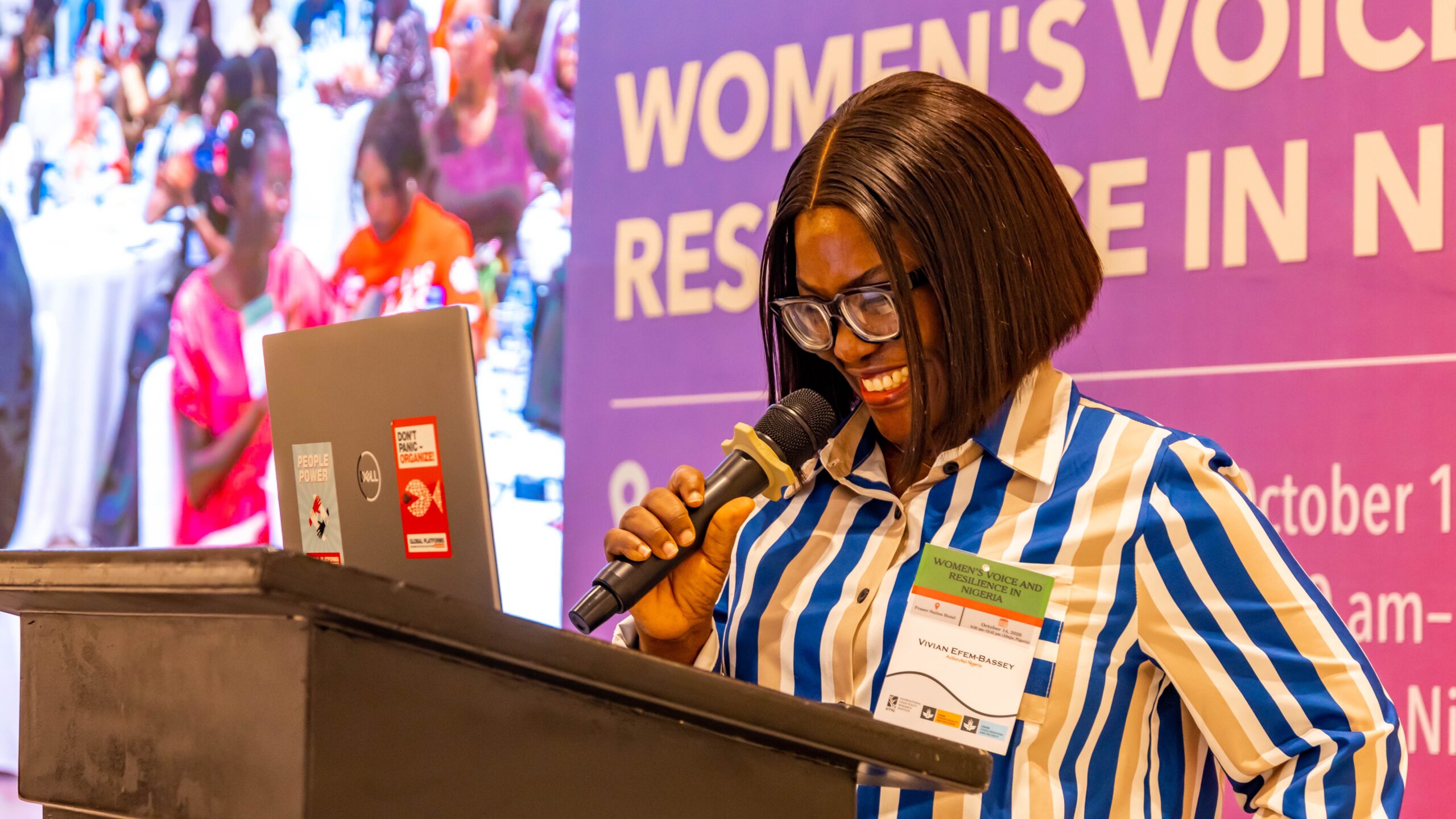
Unpacking these differences was the focus of an October 5 pre-conference workshop at the 2026 Sexual Violence Research Initiative (SVRI) Forum in Bangkok, organized by the Cash Transfer and Intimate Partner Violence Research Collaborative. The workshop examined what growing evidence tells us about how different types of economic interventions affect violence against women in the Global South, with a focus on intimate partner violence (IPV), the most prevalent form of violence against women globally.
The findings show various approaches can help to reduce IPV, with some important cautions: Not all economic interventions have the same effects on violence against women, and simply improving women’s access to economic opportunities does not necessarily reduce their risk.The potential effects depend on whether opportunities materialize into meaningful and sustained benefits, who controls those benefits, how programs are delivered, and the social context in which programs operate. To mark the International Day for the Elimination of Violence against Women (November 25)we recap some of the new evidence, lessons, and where we think the field should go next.
Cash transfers: Strong evidence of protective effects
Among economic interventions, cash transfers have the strongest—and longest standing—evidence of reducing IPV. The Collaborative’s mixed methods review published in 2018 found that 79% of the rigorous quantitative studies reviewed reported reductions in IPV. A subsequent meta-analysis found that cash transfers reduced rates of physical/sexual IPV and emotional IPV by 4 and 2 percentage points, respectively. We have therefore shifted to focus on questions beyond impact, to understand how cash transfers reduce IPV, under what conditions, and whether impacts persist over time.
At SVRI, we presented new evidence from a portfolio of 12 evaluations of primarily government-run cash transfers across 10 countries, aimed at addressing these questions. One key finding is that cash transfers can reduce IPV even without additional “plus” activities.
This is important, as violence prevention stakeholders often expect that adding gender-specific complementary interventions will boost effectiveness (e.g., gender-focused or couples’ dialogues, livelihood support, or linkages to services). While such additions are assumed to strengthen protective effects, evidence from our evaluations is mixed: some complementary activities offer additional benefits (Bangladesh, Mozambique), others do not (Ghana), and some even introduce new risks (Liberia). Results suggest that effectiveness depends on the type of activities, how well they are implemented, and the context. Findings also indicate that getting the fundamentals of cash transfer design right—including adequate benefit values, predictable payments, and clear communication—can be as important as adding new program components.
Employment: It’s not just the job, but the quality and context
Promoting women’s employment is an increasingly prominent development priority. However, the relationship between women’s work and IPV is complex. We presented a new mixed-methods review that finds employment (defined as paid labor or work for income, excluding sex work) can have protective or adverse effects. Among 20 quantitative studies focused on women’s employment, 40% found that it decreases IPV, 45% that it increases IPV, and 15% found no significant effects.
Mixed results are driven by complex pathways. Employment can strengthen women’s economic security and connect them to social networks and services, potentially reducing IPV. But such economic independence can also challenge established gender roles, time spent working can create tensions over household and care responsibilities, and women can be exposed to potentially risky work environments. How these pathways play out depends largely on men’s responses, working conditions, and prevailing gender norms.
Importantly, increases in women’s earnings appear more likely to reduce IPV than simply being employed. Stable, adequately remunerated work may offer greater protection than insecure or poorly paid work (Myanmar). Qualitative studies also suggest that even when employment does not reduce IPV, women may continue working because they value its economic and psychosocial benefits (Bangladesh).
The implication is that economic opportunities and women’s safety should be pursued together– with attention to job quality, household dynamics, and the broader environment and working conditions.
Microfinance: More limited effects than commonly assumed
Microfinance, including saving and loan products, has a history of being promoted as a strategy for reducing poverty and empowering women with the assumption that it would help protect them from violence. Yet, a recent systematic review of microfinance interventions found that across 25 studies and 38 study arm comparisons, most (63% of comparisons) had no statistically significant effects on violence against women and girls.
In addition, 11% of the comparisons found increases in violence, potentially due to repayment challenges and backlash against social norms, although savings opportunities appeared more favorable than loans. Importantly, adding gender training or male engagement activities did not produce comparatively better outcomes than microfinance alone, suggesting that such additions cannot be assumed to strengthen violence prevention.
These results are consistent with the broader evidence that microfinance often has limited impacts on households’ and women’s economic security and agency. In the systematic review above, 37% (n=14) of the trial arm comparisons failed to even evaluate the program’s impact on economic outcomes. Further, of those comparisons that found no economic impacts, all concurrently found no impact on violence against women and girls.
These findings underscore the importance of first understanding whether programs meaningfully improve women’s economic standing before evaluating their effect on IPV—as well as the need to pay attention to design features (such as predatory and high interest loan repayment obligations) that may affect impact.
Assets and property rights: Promising but still developing evidence
Programs and policies that strengthen women’s ownership of land, housing, and productive assets may help reduce violence against women by improving economic security, income, physical safety, agency, and attitudinal change.
Emerging evidence from our new mixed-method review suggests strong potential—with 69% of 13 quantitative studies and 33% of 12 qualitative studies showing protective effects. Particularly promising were interventions strengthening land and productive asset ownership (African region, Kenya). The review also highlights how asset-related debts and cultural practices including dowry and bride price may increase women’s risk of violence by strengthening the control that partners and families have over women (India, Timor-Leste).
However, given the diversity of intervention types reviewed and small number of studies focusing on each, more research is needed to understand which approaches are effective in what settings.
From evidence to impact at scale
Taken together, evidence points to an important lesson: economic strengthening should not be treated as a single intervention, and there is no universal formula for reducing violence against women through economic programs. The type of intervention matters, as does its design, implementation, and how pathways play out in different contexts.
For policymakers and practitioners, this calls for moving beyond the question of whether economic programs can prevent violence against women (they can!), to identifying how to design and deliver existing programs to maximize their protective effects while minimizing potential risks. Looking ahead, the Collaborative is prioritizing evidence generation and translation in three areas:
- “Cash-plus”: Identifying scalable, cost-effective complementary activities that can strengthen synergistic violence prevention benefits of cash transfer programs, without overburdening the systems delivering them.
- Climate resilience interventions: Understanding whether adaptive social protection, insurance, innovative financial products, and other interventions to strengthen climate resilience can help protect women from violence as climate-related economic insecurity increases.
- Employment and livelihoods: Assessing the job characteristics and working conditions that can help protect women from violence, including how affordable childcare, family-friendly workplace policies, and other supports programs or broader systems can ease the care and domestic burdens on working women.
The urgent task of preventing violence against women should not be left to specialized violence prevention programs alone. Large-scale economic strengthening programs already reach millions of the most marginalized women. By using evidence to maximize these programs’ protective effects, we have an opportunity to make violence prevention part of broader development efforts—and improve the lives of far more women.
Lori Heise is Founder and Co-Directorof the Prevention Collaborative and Professor at the John Hopkins Bloomberg School of Public Health; Tia Palermo is President of Policy Research Solutions (PRESTO) and Research Associate Professor at the University at the State University of New York at Buffalo; Amber Peterman is Impact Evaluation Specialist at the UNICEF Evaluation Office in Nairobi; Meghna Ranganathan is Associate Professor of Social Epidemiology at the London School of Hygiene and Tropical Medicine; Shalini Roy and Melissa Hidrobo are Senior Research Fellows with IFPRI’s Poverty, Gender, and Inclusion Unit.
The Cash Transfer and Intimate Partner Violence Research Collaborative is a multi-organization consortium working on generating rigorous evidence and translating it for programmatic and policy action, hosted by IFPRI. To learn more about the evidence, ongoing research, and opportunities for collaboration, visit our website.