





Key takeaways
- Sudan’s conflict has devastated food systems. The Third Sudan Conflict Conference explored how farmers, businesses, and markets face severe disruptions, driving food insecurity and livelihood losses.
- Recovery requires more than humanitarian aid. Support must strengthen livelihoods, market systems, and resilience while responding to immediate needs.
- Evidence and local adaptation offer hope. Households, traders, and institutions continue to adjust, showing that recovery is possible with sustained investment and coordination.
Three years into the outbreak of violent conflict in Sudan, the crisis has become far more than a humanitarian emergency. Evidence presented at the Third Sudan Conflict Conference in Cairo in April 2026 showcased how the war has disrupted agriculture, markets, livelihoods, public services, and institutions, while forcing households and businesses to adapt under extreme pressure. The conference highlighted a central message: Sudan’s recovery will require coordinated strategies that link humanitarian assistance with longer-term resilience and development.
Food systems and livelihoods under stress
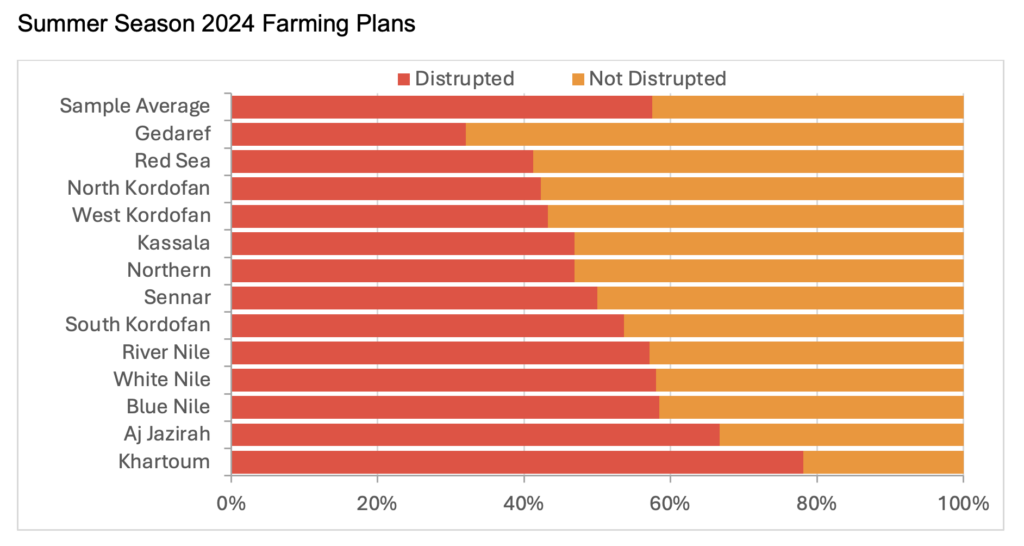
The first session showcased the deep impact of the conflict on food security and livelihoods while identifying potential pathways for recovery. Shima Mohamed (IFPRI) presented smallholder farmers’ survey findings (Figure 1), showing that nearly 60% of farmers reported conflict-related disruptions, mainly due to crop destruction, insecurity, high input costs, and limited access to finance. Ali Musa Abakar (Arab Organization for Agricultural Development, AOAD) argued that Sudan’s agricultural crisis reflects systemic collapse rather than a temporary production shock, while Hambulo Ngoma (CIMMYT) highlighted how disruptions to input supply chains have constrained local food production, contributing to an estimated cereal deficit of 2.7 million metric tons in 2025.
Figure 1
The second session turned to resilience pathways and sustainable recovery. Oliver Kirui (IFPRI) showed that while many micro-, small, and medium-sized enterprises remained operational, more than 60% have experienced temporary or complete closure since the conflict started, with resilience closely linked to access to finance and market position. Muhammad Khalifa (IWMI) demonstrated how spatial analysis can guide anticipatory planning in areas affected by conflict, displacement, and environmental shocks. Tarig Alhaj Rakhy (IFPRI) presented evidence from the rural household panel survey showing that, despite some improvements in food consumption since 2023, severe food insecurity persists and many households continue to rely on erosive coping strategies.
Humanitarian assistance matters—but design and timing are critical
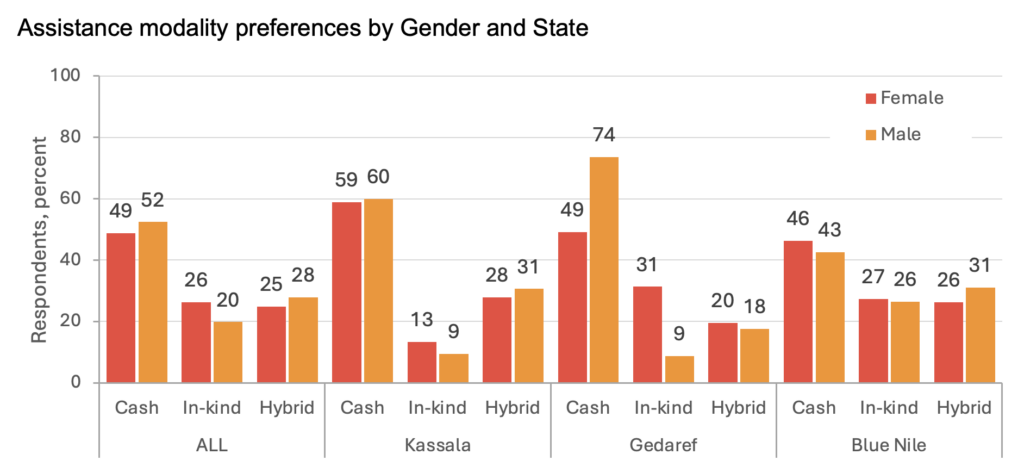
Several presentations examined the role of humanitarian assistance in supporting internally displaced people. Halefom Y. Nigus (IFPRI) presented findings linking Ramadan fasting with improved food consumption, dietary diversity, well-being, and social cohesion. Kibrom Abay (IFPRI) showed that delays and reductions in cash-based transfers worsened food security and stress among displaced households. Hala Abushama highlighted differences in assistance preferences within households (Figure 2), finding that while cash was generally preferred, women were more likely than men to favor in-kind support. Together, these findings underscored that humanitarian assistance remains essential, but programming should avoid one-size-fits-all approaches and adapt to household needs and local context.
Figure 2
Market intelligence and private sector adaptation
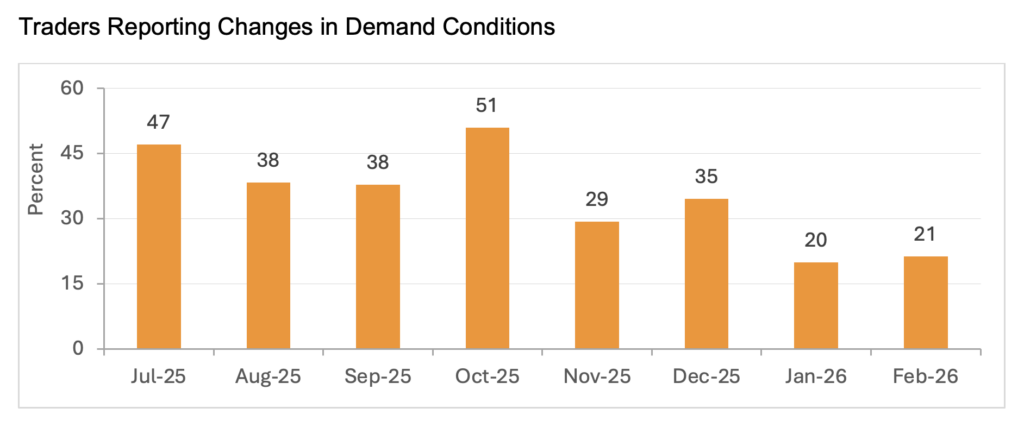
A recurring theme during the conference was the resilience of Sudanese markets. Tarig Alhaj Rakhy, Hala Abushama, and Shima Mohamed presented evidence from the Sudan Market Monitoring System showing persistent price fluctuations and strong state-level variation, especially for staple foods and fuel, and also shed light on how traders adapt by changing routes, diversifying suppliers, relying on informal channels, and adjusting business strategies, despite remaining vulnerable to conflict-induced challenges (Figure 3). The session concluded with a demonstration of the Sudan Market Monitor platform, a near-real-time market intelligence tool covering prices and availability of over 40 essential commodities across Sudan’s 18 states.
Figure 3
Private sector participants stressed that market intelligence and real-time data are essential for survival. Mohamed Saud Elberier (Mamoun Elberier Group) highlighted the shift from efficiency-driven business models to resilience-oriented strategies. Nafeesa Abusamra (249Startups) stressed the importance of low-cost tools such as SMS and WhatsApp for communicating market information. Mamoun Dawelbeit (ABC Links Services Co.) discussed the changing structure of markets and the role of informal and cross-border trade. Sarah Khalil (Teital Oil Mills) described severe constraints facing agro-processing, noting that more than 400 factories are now out of operation. Ahmed Shibrain (AU-IBAR) highlighted disruption in the livestock sector and the need for better livestock data.
Implementation challenges, donor priorities, and data ethics
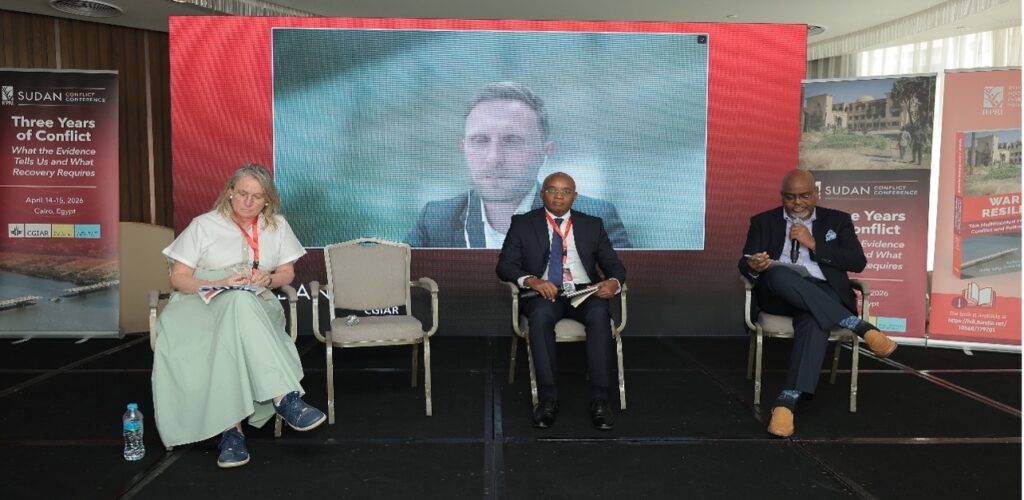
The session on implementation of programs focused on how recovery can be supported under continued conflict. Frans Schapendonk (Alliance of Bioversity and CIAT) highlighted opportunities to better integrate refugees and internally displaced people into local agriculture and water systems. Hongjie Yang (FAO) emphasized that emergency agricultural support can strengthen long-term production capacity, pointing to large-scale FAO-supported seed distribution and livestock vaccination efforts. Hanan Malek Hamdan (UNHCR) brought up the scale of the regional displacement crisis and rapidly growing demands on the refugee support system. Nurein Abdulfattah (Mercy Corps), Arvind Kumar (UNDP), and Gabrielle Fox (Cash Consortium of Sudan) all argued that recovery efforts should go beyond humanitarian relief by supporting livelihoods, market systems, productive capacity, and income-generating opportunities.
Donor representatives stressed the need for flexible, multi-year financing and stronger coordination among partners. Ed Barney (British Office Sudan) highlighted continued UK support for cash assistance, nutrition, food security, and locally led responses, while Josephine Kalinauckas (EU delegation to Sudan) described the European Union’s shift from government-led development cooperation to delivery through UN agencies, international NGOs, and member-state partners, with continued focus on health, education, water and sanitation, livelihoods, gender, conflict sensitivity, and community participation. David Mutuku (AfDB) outlined the African Development Bank’s growing portfolio on Sudan, with a strong focus on agriculture, financial institutions, and infrastructure.
The final session focused on generating reliable and ethical evidence in conflict settings. Abdelrahman Nagy (3ie) highlighted persistent data gaps in areas such as humanitarian effectiveness, climate adaptation, mental health, social protection, youth employment, and women’s labor force participation. Sikandra Kurdi (IFPRI) emphasized the need for stronger safeguards for researchers and respondents, while Niklas Kabel Pedersen (Voluntas) stressed that risk assessment should precede and guide all stages of data collection. Abdelatif Ejaimi (PACT Consulting), Mohamed Hamza (Consulsat), Zipporah Moraa (GeoPoll), and Samer Mohamed (DataQ) discussed practical approaches to improving data quality and ethics, including the use of local enumerators, representative sampling, privacy protections, and stronger field engagement.
Book launch: War, resilience, and pathways to recovery
The conference featured the launch of the new IFPRI book War and Resilience: The Multifaceted Impacts of Sudan’s Conflict and Pathways to Recovery, edited by Khalid Siddig, Oliver Kirui, and Paul Dorosh. The volume brings together evidence on the conflict’s impacts on agrifood systems, markets, livelihoods, human capital, and recovery prospects. Discussions explored the political economy of the conflict, agrifood system dynamics, food security trends, and household coping strategies. Participants also looked ahead to recovery, examining reconstruction scenarios, agricultural recovery, human capital challenges, and pathways toward peacebuilding and agriculture-led growth. Reflections from academic, humanitarian, private sector, and policy experts highlighted the importance of evidence-based approaches to Sudan’s long-term recovery.
Toward evidence-based recovery
The conference underscored both the scale of Sudan’s challenges and the resilience of its people and institutions. Across agriculture, markets, businesses, and communities, Sudanese actors continue to adapt under extraordinarily difficult conditions. The evidence presented in Cairo points to a clear conclusion: recovery is possible, but it will require sustained investment, coordinated action, and a long-term commitment to building resilience alongside humanitarian response.
Tarig Alhaj Rakhy is a Research Analyst with IFPRI’s Development Strategies and Governance (DSG) Unit, based in El-Obeid, Sudan. Hala Abushama is a DSG Research Analyst based in Cairo. Khalid Siddig is a DSG Senior Research Fellow and the Leader of IFPRI’s Sudan and Kenya Country Programs, based in Nairobi, Kenya, and an Associate Professor at Khartoum University, Sudan.
This event and the research shared through it were supported by the donors who fund the CGIAR’s Science Program on Food Frontiers and Security and Policy Innovations through their contributions to the CGIAR Trust Fund.