


Key takeaways
- Humanitarian data systems are shrinking. Funding cuts and declining survey coverage are creating major gaps in food security data just as conflicts, climate shocks, and other risks are increasing.
- Data gaps make crises harder to detect and address. Reduced coverage in countries such as Somalia and Nigeria leaves vulnerable populations less visible, weakens early warning systems, and makes anticipatory action more difficult and costly.
- Technology cannot replace ground-level data. AI, modeling, and remote sensing can help fill gaps, but reliable humanitarian decision-making still depends on regular household, market, and livelihood data collected on the ground.
During a time of growing, compounding risks to the global food system—including ongoing conflicts, the most severe El Niño in decades, and disruptions to global trade—in too many places, humanitarian data are disappearing. Government budget cuts, shrinking development assistance, and competing priorities are eroding key streams of data on food security and a range of related issues.
This humanitarian data drought is an emerging challenge that threatens to worsen existing crises and possibly create new ones. It demands action to safeguard critical humanitarian data streams. Without fresh data, people in crisis become harder to see, harder to reach, and all too easy to overlook.
A developing data drought
Dramatic declines in the collection of food security data pose the most immediate risks. In recent years, fewer and fewer countries have been reporting this crucial information. The 2026 Global Report on Food Crises covered only 47 countries—a 10-year low. In the report, the UN Food and Agriculture Organization and World Food Programme say that their primary data collection effort has declined by 30% in 2025, largely due to funding cuts to the agencies’ operational budgets.
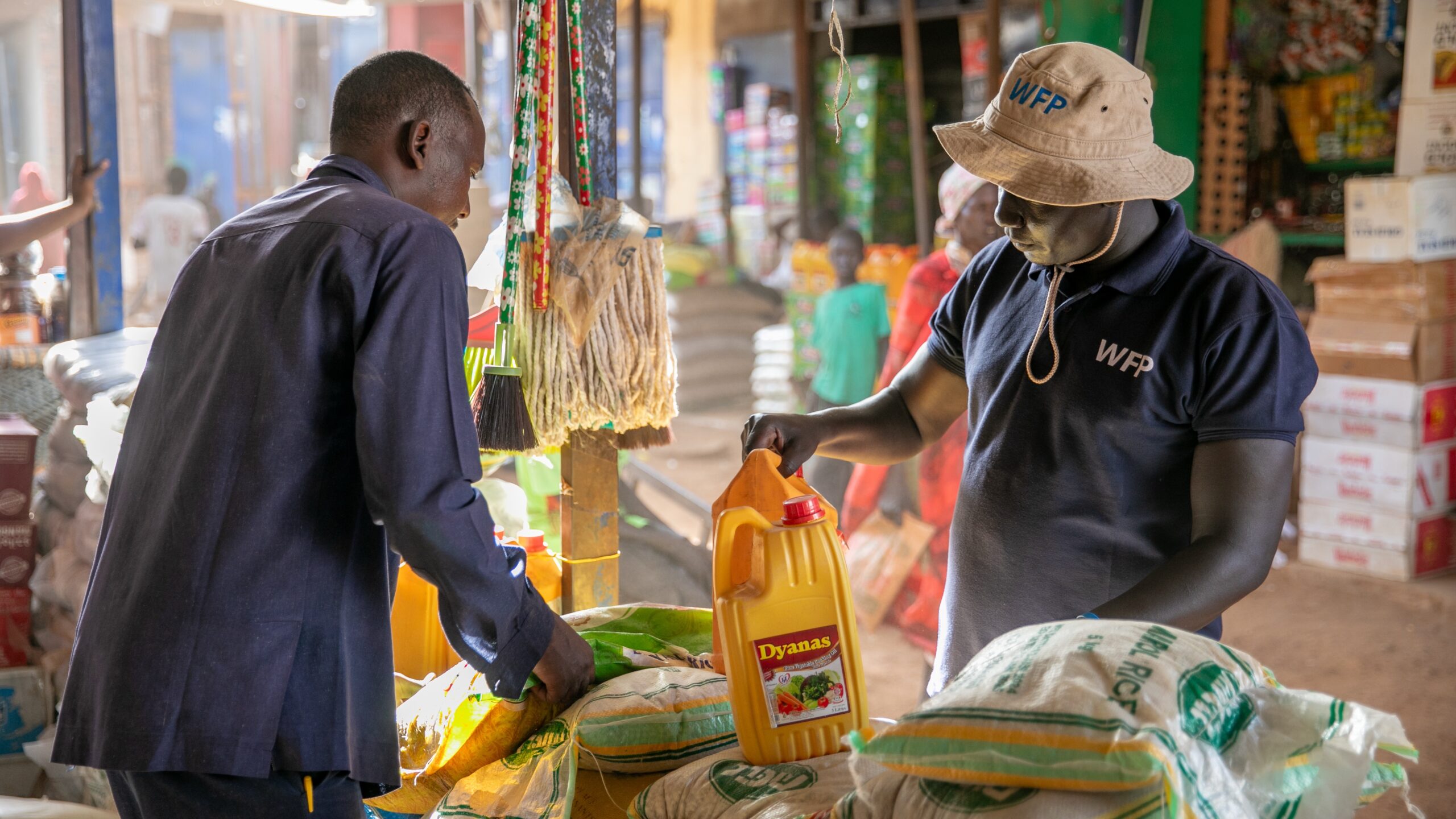
Most at risk is real-time data about households and livelihoods that shape food security—food prices, livestock prices, household indicators. That is the gap.
The gap represents an erosion of the information infrastructure on which humanitarian action depends. Household surveys, market monitoring, livelihood information, early-warning systems, and food-security assessments are the eyes and ears of the humanitarian system.
This represents a troubling paradox: at precisely the moment when humanitarian risks are becoming more complex and resources more constrained, our ability to observe those risks is diminishing. This problem demands urgent attention to preserve—and, where possible, expand—forms of humanitarian data collection. Systematically gathering information is not a mere peripheral analytical function but rather part of the essential infrastructure of humanitarian response.
Emerging data deserts
Nowhere is the risk as acute as in Somalia. The latest Integrated Food Security Phase Classification (IPC) analysis projects that 5.4 million people will face high levels of acute food insecurity from October to December 2026. It determined that internally displaced people in Baidoa face a risk of Famine. At the same time, severe funding constraints are shrinking the evidence base on which these estimates rest. In 2026, assessments covered only 35 of Somalia’s 107 livelihood zones, down from 73 the previous year, leaving significant gaps across pastoral, agro-pastoral, and riverine areas of the northwest, central, and southern regions. Country-wide vulnerability estimates are now being produced with greater uncertainty.
To guide its decision-making, Nigeria uses the Cadre Harmonisé (CH), West Africa’s version of the IPC. Nigeria, one of the few countries in the world with IPC/CH5 (Catastrophe) conditions, is also experiencing a large decline in survey coverage. The number of household food security surveys declined from more than 19,000 in 2023 to 17,000 in 2025 and 14,500 in 2026. As a result, coverage of the latest CH analysis declined from the usual 26 states to just one state in March 2026 (Figure 1), leaving large parts of the north and northwest unassessed despite a history of food insecurity in these areas. The June-August 2026 outlook was informed by forecasts using 2025 data, rather than current assessment data.
Figure 1
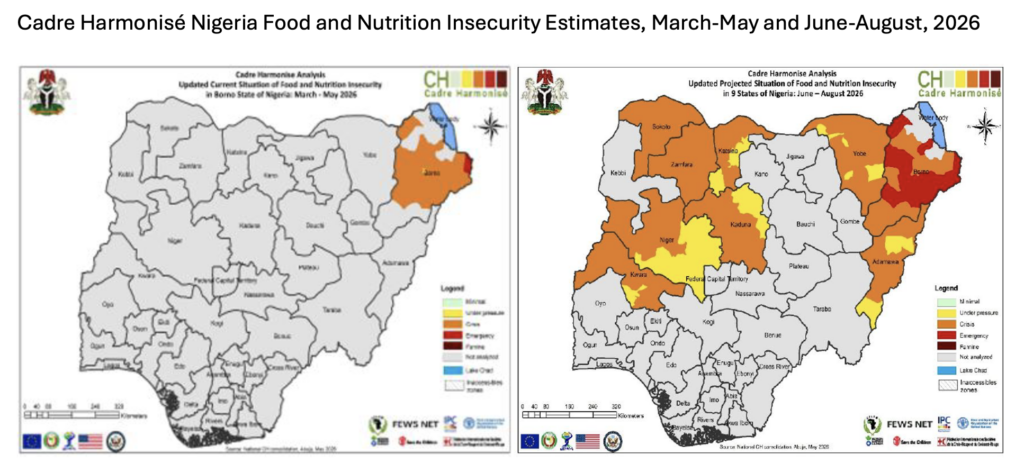
There is a risk that in the many grey areas of these maps, conditions may be changing. Those populations are effectively invisible to decision-makers, and thus, urgent problems may go unnoticed and unaddressed—like the ongoing Ebola outbreak in the Democratic Republic of the Congo, which began months before it was officially confirmed and a formal response began.
A dangerous feedback loop
The lack of fresh household data also limits opportunities for anticipatory action: providing support before a shock arrives or intensifies and before humanitarian needs reach crisis levels. That requires a high degree of data preparedness. As information systems weaken, and the humanitarian community is left without the information needed for quality, timely decision-making, it will be harder to identify opportunities to act early.
This is a symptom of the broader problem. Even when humanitarian resources are abundant, imperfect information is costly. When resources are scarce, those costs rise. Decisions must be made about where limited assistance goes, which populations are prioritized, when interventions begin, and when conditions justify scaling them up. Each of those decisions depends on credible and sufficiently current information.
Weakening information systems therefore create a dangerous feedback loop. Funding pressures reduce data collection; weaker data make emerging crises harder to detect; delayed detection makes early and anticipatory action more difficult; and responding later, when conditions have deteriorated, is both more expensive and less effective.
There is also an accountability issue. A lack of formal proof regarding a need does not confirm its nonexistence, particularly during critical budget allocation decisions.
Toward a more resilient and sustainable information architecture
What would it take to reverse the data drought?
The immediate priority must be for country governments, supported by development partners, to protect the collection of essential primary data. There are many relatively inexpensive ways to do this. Sampling approaches can be reviewed, collection systems streamlined, and duplication reduced. Remote sensing, modeling, and artificial intelligence can help fill gaps and make better use of scarce resources. But these technologies do not eliminate the need for primary information. AI models, for instance, ultimately require observations against which they can be trained and tested. Put simply: no ground data, no reliable model, no reliable AI.
Better coordination can also stretch scarce resources further. Common standards, interoperable systems, and joint data collection can reduce duplication across humanitarian agencies and partners.
The present crisis also points to a more fundamental question. Rather than trying simply to preserve or reconstruct the information architecture of the past, we should use this moment to build a more resilient one for the future.
Such a system would combine several sources of information: national statistical and early-warning systems; regular household and market data; remote sensing and other earth-observation technologies; administrative and increasingly digital data; and modeling and AI. International humanitarian systems would complement these capabilities, particularly in fragile and conflict-affected areas where national coverage may be weakest.
The long-term objective should be stronger national ownership. Governments, national statistical offices, universities, and local research institutions must become increasingly central to the production and stewardship of food-security information, supported by sustained national financing as well as international investment. At the same time, national ownership cannot mean abandoning independent information. In the most fragile and politically contested environments, credible independent ground-level observation remains indispensable.
The challenge, therefore, is constructing an information ecosystem in which different sources reinforce one another—where there is enough primary observation to know whether the signals coming from models, satellites, and algorithms correspond to what people are actually experiencing.
The fundamental danger of the emerging data drought is that people experiencing a worsening crisis may disappear from view. Humanitarian systems cannot respond to what they cannot see.
Jean-Martin Bauer is WFP Director of Food Security and Nutrition Analysis; Steven Were Omamo is Director of IFPRI’s Development Strategy and Governance Unit and Director for Africa. Opinions are the authors’.