



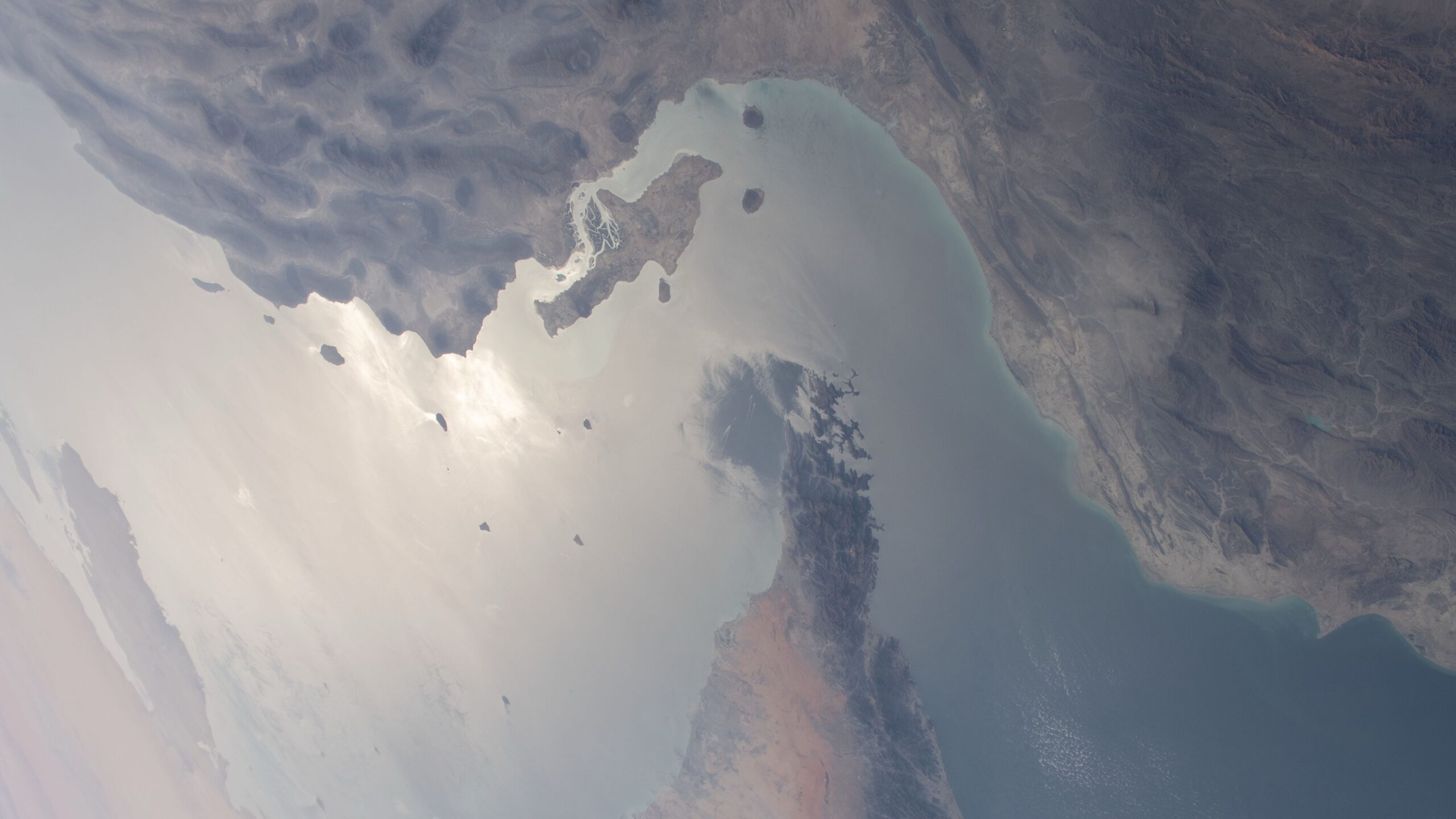
The attack on Iran by U.S. and Israeli forces and Iranian retaliation against U.S. allies in the Persian Gulf have roiled energy markets by disrupting shipping through the Strait of Hormuz—the Gulf’s only sea passage to the open ocean. About 27% of the world’s oil exports, 20% of global liquified natural gas (LNG) exports, and 20%-30% of global fertilizer exports, including urea, ammonia, phosphates, and sulfur, pass through the Strait. Drone and rocket strikes on tankers pose ongoing danger and have made maritime insurance costs prohibitive in the region, resulting in a more than 70% decline in shipping through the Strait since the conflict began (Figure 1). A prolonged conflict would likely choke global sea trade with the Persian Gulf region, raising the costs of energy and fertilizer prices globally, directly threatening food security in Gulf countries (which depend on imports of grains, oilseeds, and vegetable oils through the Strait of Hormuz), and potentially affecting food production and prices in other regions as well.
Figure 1
Potential impacts on food supplies in the Persian Gulf
Countries in the Persian Gulf1 depend heavily on imported agricultural commodities (Figure 2). Like much of the Middle East and North Africa, per capita wheat consumption among these countries is quite high, often exceeding 100 kg/capita/year. Oman is the exception, where imported rice is also an important part of the daily diet. The region depends heavily on imported vegetable oils and oilseeds like soybeans. Sugar is also a major import, some of which is further processed and exported to Africa and other regions.
Figure 2
Over the past 18 months, food inflation has been relatively low in the region, with most countries reporting year-over-year rates under 2%. The exception has been Iran, which before the current war had seen years of chronic high inflation due to economic mismanagement, global sanctions, and its role in regional conflicts. Iran reported a 42% year-over-year increase in retail food prices in September of 2025 (FAOSTAT). Retail prices of key foodstuffs in Tehran show large increases over the past several months (Figure 3).
Figure 3
If the Strait of Hormuz remains effectively closed to shipping, other Persian Gulf countries will need to find alternative import corridors. Some grain can move overland from Russia into Iran, or from Syria and Turkey into Iraq, but at higher costs. Saudi Arabia may be able to import more through its Red Sea ports, but daily shipping volumes in that corridor have been down almost 60% since December 2023 due to attacks by Houthi rebels (an Iran ally).
Impacts of shipping disruptions on energy and fertilizer markets
Saudi Arabia, Iran, the United Arab Emirates, Kuwait, and Iraq export most of their crude via the Strait, mainly to Asia. According to IMF Portwatch, roughly 60% of the ships transiting the Strait of Hormuz are tankers. Since the conflict began on February 28, tanker traffic in the region has effectively halted and energy prices have soared. Crude oil futures prices for May 2026 delivery are up more than $10/barrel, or 15%. Futures for Dutch TTF, the European natural gas benchmark, topped 65 euros/megawatt-hour early March 3 following the drone attack on a Qatar LNG facility that same day, and are currently trading more than 50% higher than before the conflict began.
The plunge in shipping activity through the Strait of Hormuz has also pushed global fertilizer prices higher. Falling shipments of natural gas—an important feedstock for nitrogenous-based fertilizers—have driven up prices, while fertilizer exports from the Persian Gulf have dropped precipitously. Qatar, Saudi Arabia, Bahrain, and Oman are large fertilizer exporters, particularly of urea, diammonium phosphate (DAP), and anhydrous ammonia (Figure 4). Some estimates suggest that as much as one-third of global fertilizer trade could be affected. Iran is also a major producer of nitrogenous fertilizers, but exports very little.
Figure 4
Many countries rely on the Persian Gulf region as a supplier of fertilizers (Figure 5). As we saw in 2022 and 2023, the region was an important source of urea, DAP, and other ingredients for countries trying to offset losses in imports from the Black Sea, and more recently by China’s export restrictions on nitrogen and phosphate exports. If the conflict in the Persian Gulf continues and shipments remain disrupted, importers will have to seek out alternative sources. As with previous disruptions, such efforts will likely be successful, but come with significantly higher costs.
Figure 5
Prices for key fertilizer products are up. Middle East urea prices closed over $590 per metric ton (MT) on March 5, up over $90 per metric ton (MT) compared to a week earlier, a 19% increase, while U.S. Gulf DAP prices hit $655/MT, up over $30/MT, a 5% increase (figure 6). While fertilizer prices remain far below the record highs seen in late 2021 and early 2022, the increased costs come at a time when farmers around the world are already facing lower prices for grains, oilseeds, and other field crops. Higher fertilizer prices mean lower profitability margins for producers and could lead some to plant less input-intensive crops like rice, wheat, or maize in favor of oilseeds, or apply less fertilizer on their crops. The immediate impact may be relatively small, since many farmers would have already made input purchases for spring planting in the Northern Hemisphere; however, a prolonged conflict could affect planting decisions and yields in the Southern Hemisphere, as well as fertilizer applications for rice in South and Southeast Asia.
Figure 6
Increased energy costs could also potentially reignite global food inflation concerns. Energy accounts for a significant share of production costs for crops and livestock and contributes to a large share of post-farmgate costs (e.g., milling costs, transportation, refrigeration, and other product transformation costs).
Implications for food security
The conflict’s immediate impacts on food security are largely regional. Persian Gulf countries are highly dependent on imports, and a prolonged disruption of shipping through the Strait of Hormuz will have a significant impact on food supplies. Shipping through less contested routes will be a challenge, and at the very least push food prices higher. The U.S. has announced efforts to provide naval escorts through the Persian Gulf and Strait of Hormuz, as well as offering war risk insurance for carriers. But as of now, it is unclear whether those efforts will make much of a difference, let alone be able to overcome the effective closure of the strait to shipping. As of March 4, Maersk has temporarily suspended cargo bookings in the Persian Gulf.
Over the longer term, a prolonged disruption of oil, LNG, and fertilizer exports from the Persian Gulf will lead to further increases in energy and fertilizer prices and cause importers of those products to seek alternative suppliers. For many agricultural producers, already facing high input costs and low commodity prices, operating margins will tighten further, likely affecting planting decisions and input use.
The experience of recent disruptions such as the COVID-19 pandemic and the war in Ukraine suggests that markets will help mitigate the adverse impacts of the conflict—as long as countries avoid export restrictions and other beggar-thy-neighbor policies that exacerbate the impacts. There is much at stake as the conflict plays out and policymakers in affected countries react. Higher energy and input costs risk reigniting global food inflation just as retail food prices had returned to more historical levels in many countries.
Joseph Glauber is a Research Fellow Emeritus with IFPRI’s Director General’s Office. Opinions are the author’s.
1. For our purposes, the Persian Gulf countries include Bahrain, Iran, Iraq, Kuwait, Oman, Qatar, Saudi Arabia, and the United Arab Emirates.