





In an era marked by global economic uncertainty, geopolitical shifts, and ongoing conflicts, inclusive sustainable development remains essential to address instability, insecurity, inequality, and climate vulnerability in Africa. With this goal in mind, the government of Japan reaffirmed its commitment to “co-create innovative solutions with Africa” at the Ninth Tokyo International Conference on African Development (TICAD 9), held in Yokohama August 20-22. This commitment includes fostering public-private partnerships, promoting the empowerment of women and youth, advancing regional integration and connectivity, and strengthening inclusive global governance—all within the key pillars of economy, human society, and peace and stability.
IFPRI hosted two side events at TICAD 9. The first focused on the roles of Japanese advanced technologies, expertise, and institutional innovations in improving food and nutrition security and livelihoods in African countries; the second showcased IFPRI’s research-based policy solutions to sustainably reduce poverty and end hunger and malnutrition in the region.
Event one: Japanese expertise, IFPRI, and African development
The first event, with the theme “Japanese Innovation, African Transformation,” showcased examples of innovation frontiers for development driven by the Japanese private sector, as well as interventions—such as randomized controlled trials—that IFPRI has implemented or plans to implement in African countries.
Opening the event, Kuniko Inoguchi, a member of the House of Councilors and former Minister of State for Gender Equality and Social Affairs, said she hoped concrete examples of IFPRI’s interventions to transform Africa through Japanese innovations and policy research would provide broad insights into development challenges.
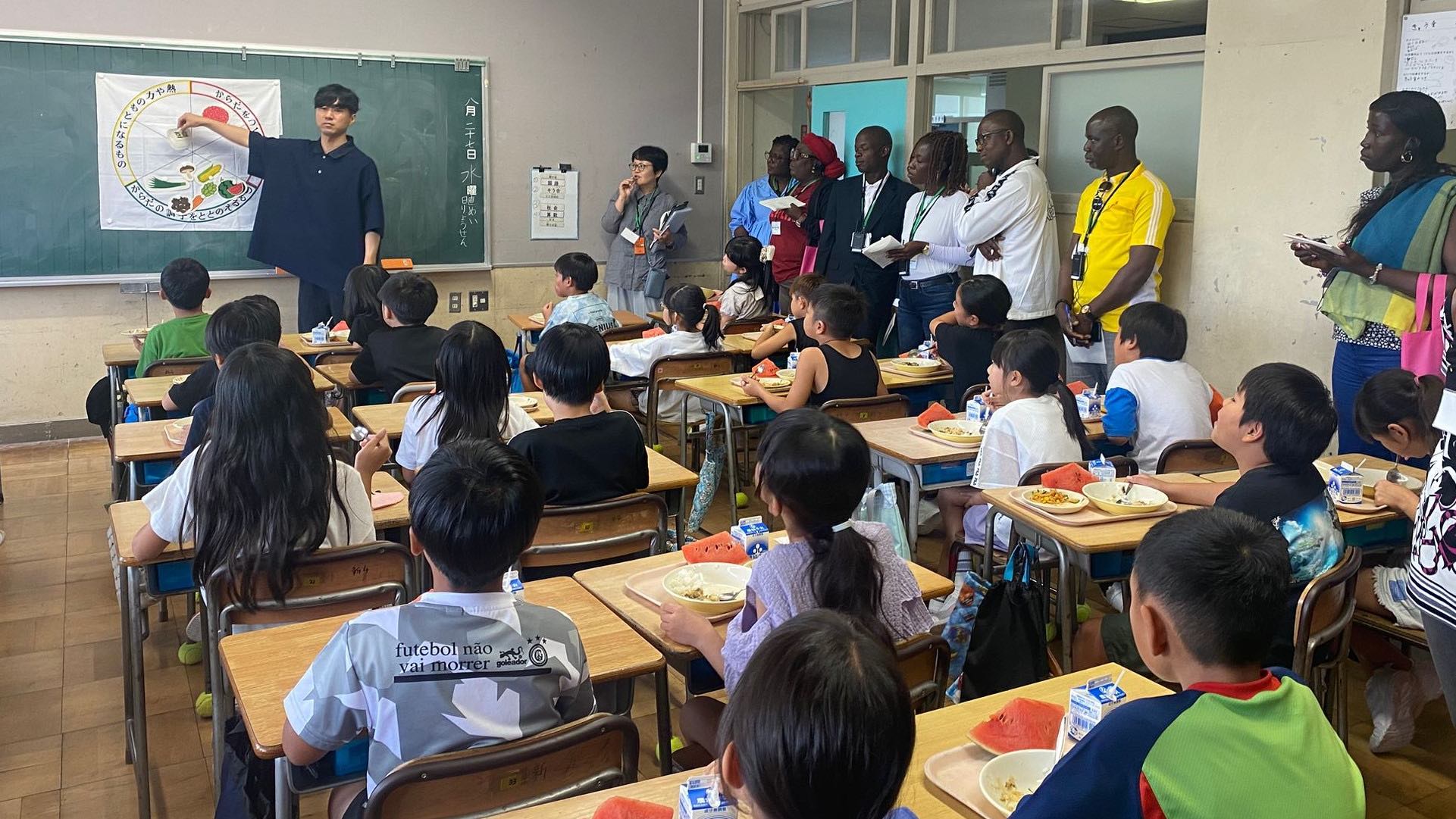
Speaking via video message, Keiko Nagaoka, a member of the House of Representatives and former Minister of Education, Culture, Sports, Science, and Technology, noted the international interest in Japan’s school lunch programs from her experience leading the 2023. G7 Education Minister meeting. The programs provide both balanced meals and nutrition education, known as shokuiku, which aims to build solid knowledge on food and nutrition and induce healthy diet behavioral change among children. This is an excellent example for African countries seeking to improve childhood nutrition, she said.
Teunis van Rheenen, IFPRI Director of Business Development and External Relations, highlighted the roles Japan can play in transforming livelihoods in African countries through investments and innovations guided by evidence, experience, and collaboration. Partners such as IFPRI are crucial in examining, testing, and scaling the transferability of Japan’s advanced technologies, expertise, and institutional innovations to other countries and contexts, he said.
IFPRI researchers and partners from Japan and Africa reported IFPRI Japan-Africa projects:
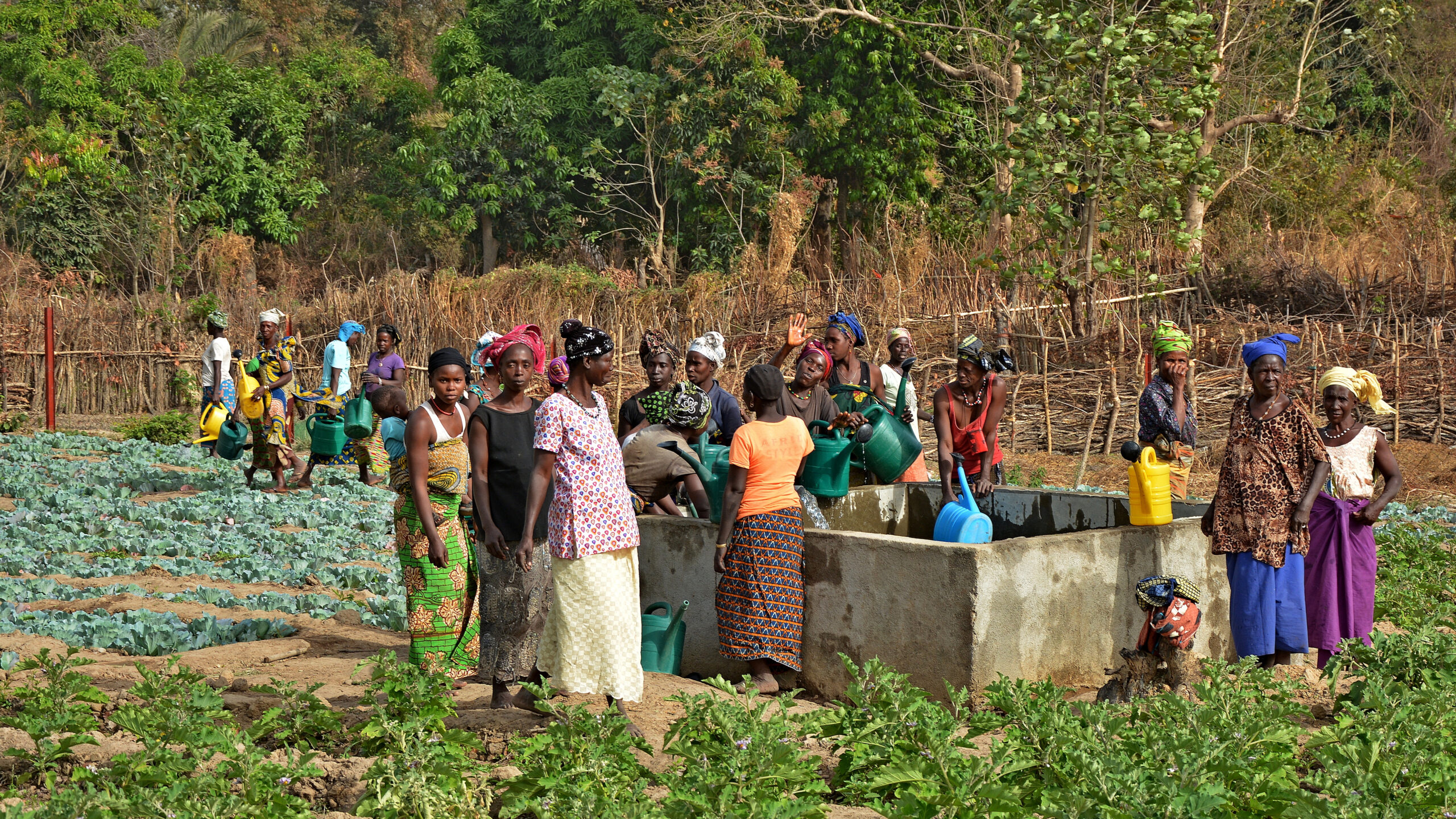
- To reduce food loss and waste in Nigeria, IFPRI has played a key role in introducing solar-powered cold storage facilities and refrigerated transportation in collaboration with both Japanese and local partners. These interventions have significantly extended the shelf life of perishable vegetables, increased the incomes of supply chain participants, and enhanced food and nutrition security among consumers.
- To assess food quality more efficiently, IFPRI is collaborating with the Japanese agri-tech company Inaho Inc. to introduce artificial intelligence-assisted, photo-based quality assessment technology that detects spoilage in tomatoes. This represents a new frontier in applying AI technologies to development assistance.
- IFPRI, Panasonic Inc., and World Vision Japan are preparing a new intervention in northern Uganda to deliver solar lanterns to off-grid refugee-hosting communities. This initiative is part of Panasonic’s Light up the Future program, which provides a safe and sustainable source of light and power. IFPRI researchers and partners anticipate positive impacts in various areas, including children’s learning.
- Panasonic also introduced Novitek, a foliar spray that synthesizes plant-growth promoters from atmospheric carbon dioxide through photosynthesis. This product has been shown to accelerate the growth of selected crops and significantly increase yields.
- IFPRI has been collaborating with Ajinomoto Co., Inc. on two projects: KOKO-Plus, a protein and micronutrient supplement for children aged 6-24 months in Ghana, and a plant-based ready-to-use therapeutic food (RUTF) for acutely malnourished children in Burkina Faso. In both product innovations, amino acids play a crucial role in enhancing their effectiveness.
- School lunch programs represent an institutional innovation through which Japan can share its world-class expertise globally. For example, IFPRI collaborated with the Noguchi Memorial Institute for Medical Research (NMIMR) in Ghana to improve nutrition in that country’s school lunch program and also introduced shokuiku and governance reform. More recently, IFPRI has partnered with the University of Niigata Prefecture and a local elementary school in Niigata City to invite and train teachers and school lunch managers from Côte d’Ivoire in the shokuiku approach.
- IFPRI has collaborated with the Japan International Cooperation Agency (JICA) and the Sasakawa Africa Association to introduce SHEP (Smallholder Horticulture Empowerment and Promotion) in northern Uganda. The initiative aims to increase farm incomes by creating mindsets among vegetable farmers to integrate marketing and production decisions.
Event two: IFPRI research-based solutions in Malawi, Nigeria, and Sudan
Opening the second event, Steven Were Omamo, IFPRI’s Director of Development Strategies and Governance Unit and Director for Africa, emphasized that achieving Africa’s developmental goals requires anchoring efforts in research-based evidence that is trusted, actionable, and tailored to the region’s realities. This approach has been a guiding principle of IFPRI’s work in Africa. The event focused on IFPRI’s work in three countries: Nigeria, where IFPRI efforts have informed national agricultural policies, market reforms, and food security strategies; Sudan, where the institute’s engagement is helping to address acute crises while building pathways toward recovery and resilience; and Malawi, where IFPRI research supports policies and investments aimed at improving food security, market access, and climate resilience.
IFPRI looks forward to strengthening its strategic collaboration with Japanese and African partners, learning important transferable lessons, and improving food and nutrition security and livelihoods in African countries and beyond.
Futoshi Yamauchi is a Senior Research Fellow with IFPRI’s Markets, Trade, and Institutions (MTI) Unit; Teunis van Rheenen is IFPRI Director of Business Development and External Relations; Eduardo Maruyama is an MTI Research Coordinator. Opinions are the authors’.
Event details:
How Japanese advanced technologies, expertise, and institutional innovations can contribute to improving food and nutrition security and livelihoods in African countries?
- Opening Remarks:
- Teunis van Rheenen, Director of Business Development and External Relations, IFPRI
- Innovations and Partnerships:
- Futoshi Yamauchi, Senior Research Fellow, IFPRI
- Off-grid Cooling to Reduce Food Loss: Solar Powered Cold Storage and Cool Transportation in Nigeria:
- Futoshi Yamauchi, Senior Research Fellow, IFPRI
- Panasonic Innovations:
- Takeyuki Yamaki, Panasonic Inc.
- Refugee Support in Uganda:
- Ryoichiro Mochizuki, World Vision Japan
- AI-Assisted Photo-Based Quality Assessment
- Aoi Fukuhara, Inaho Inc.
- Advancing Plant-based Ready to Use Therapeutic Foods (RUTF) for Improvement of Global Malnutrition:
- Yuki Okabe, Ajinomoto Co., Inc.
- Efficacy of Plant-based RUTF for Treatment of Child Wasting and Prevention of Relapse: Ajinomoto Soy-Maize-Sorghum RUTF:
- Futoshi Yamauchi, Senior Research Fellow, IFPRI
- Supplementation Trial of KOKO Plus Among HIV Exposed Children and School Meals Improvement Project in Ghana:
- Gloria Folson, Research Fellow, NMIMR
- Introducing Japanese Style Nutrition Education in Cote d’Ivoire: Shoku-iku Training in Niigata:
- Futoshi Yamauchi, Senior Research Fellow, IFPRI
- From “Grow and Sell” to “Grow to Sell”: Impacts of a market-oriented horticulture intervention in Uganda:
- Eduardo Maruyama, Research Coordinator, IFPRI
- Closing Remarks
- Masahito Enomoto, Senior Advisor, IFPRI
Side event 2
IFPRI and Africa: IFPRI’s research-based policy solutions to sustainably reduce poverty and end hunger and malnutrition in the region
- Opening Remarks:
- Steven Were Omamo, Director of the Development Strategies and Governance Unit and Director for Africa, IFPRI
- Empowering Youth and Women for Resilient and Inclusive Growth in West Africa: Showcasing IFPRI’s Work in Nigeria & Ghana:
- Oliver Kirui, Program Leader for the Nigeria and Ghana Strategy Support Programs, IFPRI
- Evidence-Based Solutions for Sudan’s Recovery & Resilience:
- Khalid Siddig, Program Leader for the Sudan Strategy Support Program, IFPRI
- Partnering for Inclusive Economic Growth in Malawi:
- Joachim De Weerdt, Program Leader for the Malawi Strategy Support Program, IFPRI