





Key takeaways
•Rising global fertilizer and energy prices are straining farmers in Argentina and Brazil even as global food supplies remain relatively ample.
•Heavy dependence on imported fertilizers makes both countries especially vulnerable to disruptions linked to the Strait of Hormuz.
•Lower margins and uncertain weather could push producers toward reduced fertilizer use or less input‑intensive crops, with risks for future supply.
Fertilizer and energy prices have spiked due to the closure of the Strait of Hormuz, putting pressure on agricultural producers and sparking fears of a potential rise in food prices. However, the current situation appears different than earlier food price crises. While the rise in fertilizer and energy prices is shifting incentives in production and energy markets (Figure 1), a recent analysis by Arita and Glauber shows that global supplies remain relatively robust and upward pressure on food prices appears weak.
Figure 1
However, higher prices for key agricultural inputs are likely to have serious impacts for farmers around the world that will reverberate through the food system. These impacts are already appearing at the country level in advance of this year’s planting, as producers face higher fertilizer and energy costs and relatively low global market prices for food.
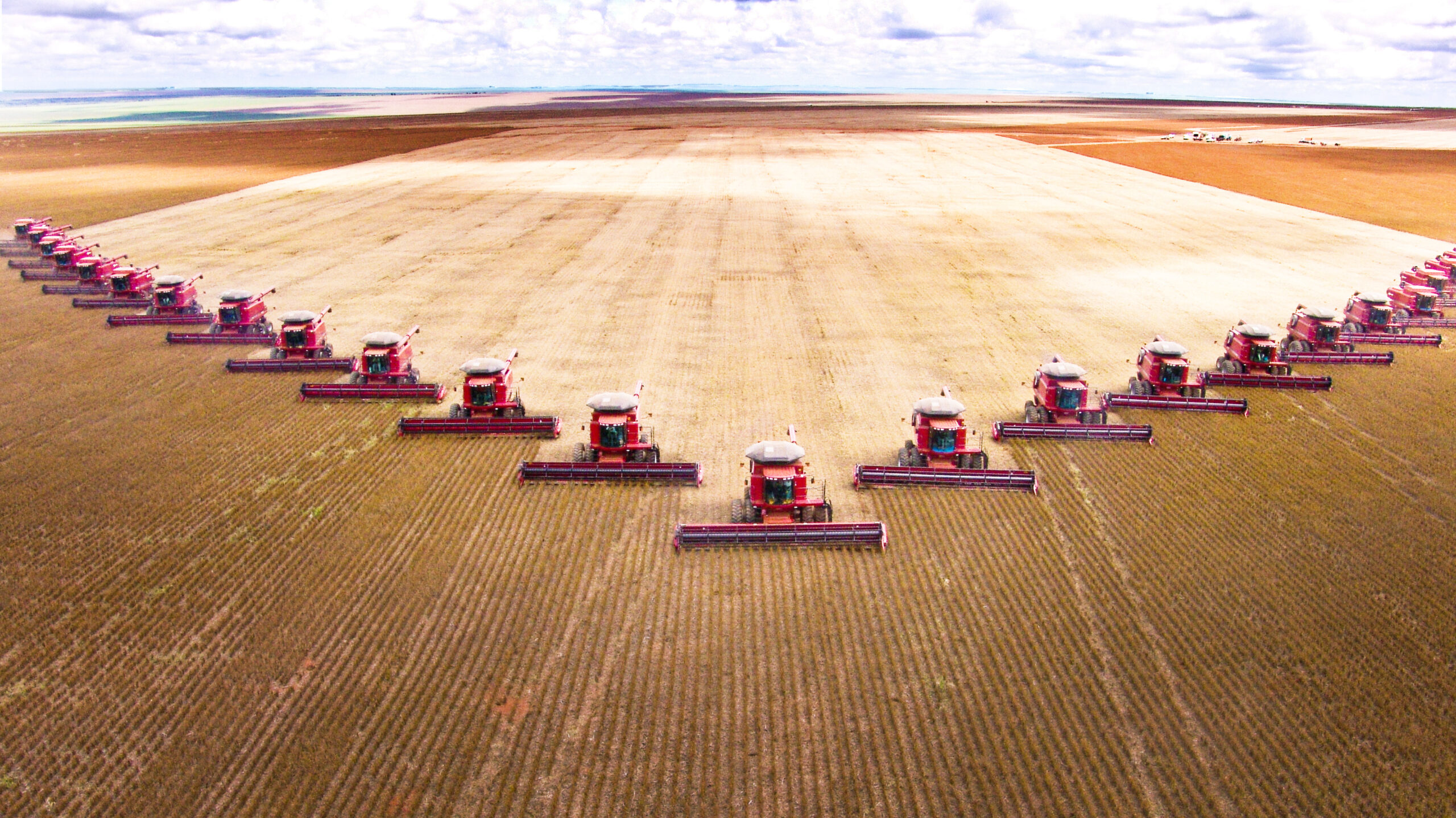
This blog post examines the impact of the Iran war and Strait of Hormuz closure on two major food-exporting countries, Argentina and Brazil. They account for 10% of wheat, 39% of maize, and 66% of soybean exports in the world, according to U.S. Department of Agriculture (USDA) estimates for the 2025/2026 marketing year. (They also export a range of other agricultural products, including meats, tropical items, and cotton). Both countries also depend heavily on fertilizer imports, a significant portion of which come from the Persian Gulf region. A continued disruption in fertilizer markets could affect producer planting decisions and fertilizer application rates, which could, in turn, affect production and commodity prices.
Recent analysis shows that the geopolitical tensions in the Persian Gulf region have quickly affected fertilizer availability and prices, reinforcing the vulnerability of countries that rely heavily on imports. Closures of shipping routes through the Strait of Hormuz affect the flow of fertilizers and key fertilizer inputs such as liquified natural gas, ammonia, and sulfur, which play a central role in global nitrogen and phosphate markets. Thus, prices of nitrogen fertilizers are closely tied to natural gas markets, while increases in liquefied natural gas prices raise production costs globally.
Fertilizer use in Brazil and Argentina
Brazil and Argentina are highly exposed to disruptions in global fertilizer markets. Both countries rely heavily on imports to meet domestic demand, with dependency levels that are among the highest in the world (Figure 2). As Colussi and Langemeier observe, this high fertilizer dependence makes these countries more vulnerable to shocks than other global suppliers like the U.S. that have substantial domestic fertilizer supplies.
Figure 2
The Persian Gulf is an important source of fertilizer—particularly nitrogen fertilizer—for both countries. About 9% of Argentina’s nitrogen fertilizer imports and 28% of Brazil’s were sourced from Persian Gulf countries in 2023, according to FAOSTAT1. They source a smaller share of phosphate fertilizers from the region: for Argentina, less than 1%, and for Brazil, about 10% of total phosphate imports originated in the Persian Gulf in 2023. (Potash imports from the Persian Gulf are minimal, as the region produces little.)
This level of import dependence is high enough that farmers in Argentina and Brazil are starting to feel the bite of rising global market prices. Fertilizer imports in Brazil and Argentina follow seasonal patterns tied to cropping cycles. While much of the planting takes place in the second half of the year, the timing of shipments means that fertilizer bookings for delivery in the next few months are occurring now.
So, for example, wheat sowing in Argentina occurs from May through August, meaning fertilizer imports typically pick up pace in May. Phosphate imports in both countries are elevated in June, July, and August, prior to soybean planting from September to November (Figure 3). In Brazil, elevated imports of urea (an important nitrogen fertilizer product) from October to January reflect producers’ efforts to procure supplies in time for the planting of the safrinha maize crop in January and February (Figure 4).
The squeeze on fertilizer supplies from the Persian Gulf region means both Brazil and Argentina must seek alternative sources. For example, Brazil has reportedly been negotiating to purchase urea from Indonesia.
Figure 3
Figure 4
How will higher fertilizer prices affect production?
Producers typically adjust to such higher costs by planting less fertilizer-intensive crops or by applying less fertilizer per hectare (ha) of cropland, or both. The responses of Brazil and Argentina to the 2022 fertilizer price spike provide a useful benchmark to assess how the current crisis may play out in the coming months. In 2022, higher fertilizer prices led farmers to reduce application rates. In Brazil, producers cut back most on phosphate fertilizers (down 12.4% from 2021 levels), followed by potash (down 9.8%), and then nitrogen (down only 1.7%) (Figure 5). Potash use then rebounded in 2023, while nitrogen and phosphate application rates stayed near 2022 levels, reflecting ongoing market disruptions.
Figure 5
In Argentina, producers reduced potash application rates (down 5.3%) and phosphates (down 2.9%) in 2022, while nitrogen application rates increased almost 4% (Figure 6). Higher nitrogen rates may have reflected the fact that prices for wheat were near record levels at the time of planting, offsetting higher input prices. With falling wheat prices but lingering high fertilizer prices through most of the following year, nitrogen, phosphate and potash use fell significantly in 2023 (down 12%, 24%, and 50% respectively).
Figure 6
Despite the reduction in fertilizer application rates in 2022, the overall impact on crop production that year is less clear. Argentina’s harvested areas of maize, wheat, and soybean were all down, as were yields. However, much of the decrease was caused by dry growing conditions due to a strong La Niña event. According to USDA data, Argentina’s maize production fell 29% in 2022, while soybean and wheat production each fell by 43%.
For Brazil, maize, soybean, and wheat area rose as producers responded to high crop prices (despite high input costs). Unlike Argentina, La Niña conditions brought rain to much of Brazil’s growing regions, resulting in higher maize, soybean, and wheat yields.
The current crisis poses potentially greater challenges for producers, who are facing much lower crop prices than they did in 2022, and while fertilizer prices are not quite as high as in 2022, expected profit margins are far less.
In this low-margin environment, much depends on the duration of the current crisis in the Gulf. A recent analysis by Shawn Arita and colleagues at North Dakota State University suggests that if the Strait of Hormuz remains closed through July, Brazil cumulative urea imports from April 2026 to March 2027 could fall by 18.7%, while a longer closure through the end of 2026 would result in a decline of 27.3%. Based on COMTRADE data, Brazil’s urea imports in 2022 declined by 9% relative to 2021 levels.
Declines of this magnitude would likely precipitate a move towards less fertilizer-intensive crops like soybeans and reduced fertilizer use, either through lower application rates or substitution towards lower-cost nutrient sources.
A further complication is the increasing probability of a significant El Niño event occurring in the last quarter of 2026. A strong El Niño tends to be correlated with drier weather in central Brazil and wetter weather in Argentina, though the timing and duration of the event is critical.
Conclusion
While the current crisis has not yet triggered the sharp increases in grain and oilseed prices seen in previous global food shocks, its effects are unfolding through different channels, with uncertain impacts on production, prices, and ultimately food security.
Rising fertilizer and energy prices in an environment of low commodity prices are reshaping incentives within agricultural systems, making fertilizer use less profitable for farmers. The timing of the current crisis means that the Southern Hemisphere, led by Brazil and Argentina, may be one of the regions to bear the bigger brunt of fertilizer price increases, particularly if the Strait of Hormuz remains closed through the summer into the fall.
Significant production declines in the region could turn the current energy and fertilizer crisis into an agricultural supply crisis, leading to higher crop and livestock prices and putting upward pressure on food prices.
Past experience suggests that the overall impact on yields and production may be small in comparison to other factors such as weather. Global supplies are relatively abundant compared to previous periods of food price spikes, one of the reasons why futures market prices for grains and oilseeds remain relatively muted. Nonetheless, with no quick resolution to the crisis foreseen, fertilizer availability and procurement will be closely watched as we approach the summer and fall planting seasons in the Southern Hemisphere.
Joseph Glauber is a Research Fellow Emeritus with IFPRI’s Director General’s Office; Valeria Piñeiro is the Regional Representative for Latin America and the Caribbean (LAC) with IFPRI’s Markets, Trade, and Institutions (MTI) Unit; Juan Pablo Gianatiempo is an MTI Research Analyst. Opinions are the authors’.
1. The Persian Gulf countries include Bahrain, Iran, Iraq, Kuwait, Oman, Qatar, Saudi Arabia, and the United Arab Emirates.